Articles

3 Negative Beliefs That Hold Entrepreneurs Back

3 Negative Beliefs That Hold Entrepreneurs Back

3 Negative Beliefs That Hold Entrepreneurs Back

“The moment you doubt whether you can fly, you cease for ever to be able to do it.”

–  J. M. Barrie, Peter Pan

Our lives are a reflection of our beliefs. Most of us know this, and yet, we cling on to old negative beliefs – even when they hold us back.

Discarding them and creating new beliefs seems to be a Herculean task.

These beliefs (which are usually assumptions and misconceptions) color our world views and justify our actions.

Yet, if we stopped to think about it and ask ourselves, “Where did we get these beliefs from?” … we’d realize that most of them were ingrained in us by our parents, teachers and other ‘well-meaning and sensible’ adults when we were young.

In most cases, these self-limiting and defeatist beliefs will impede your progress when you decide to become an entrepreneur. You’ll be setting yourself up for failure from the get-go.

Let’s look at some of the most common beliefs that are injurious to your goals…

Money Makes Money

This is probably the biggest fallacy of the lot. This misconception creates a catch-22 situation. You want to get into business to improve your financial standing… but you need money to get into business – and that’s money you don’t currently have.

So you’re doomed.

But is this reasoning valid? Do you really need money to start?

A quick look at some of the biggest business successes on the planet will show you that most of them invariably began from humble beginnings. They started off small and slowly built their way up.

In the same vein, nothing is stopping you from starting off small and climbing the ladder of business success. It’s resourcefulness and not resources that you need.

Do not count yourself out just because you lack the finances. Rest assured that enthusiasm, confidence, passion and hard work will help you find the resources you need, and you’ll be able to employ them to forward your business.

And when you do start to see some financial reward, don’t take it and spend it! During the early stages of your business it pays to put it back into the business, whether that be with outsourcing the stuff you don’t like or can’t do, or investing in tools that can move your business forward quickly.

Following Instead Of Leading

The world loves a winner and tends to put them up on pedestals. The media gives them coverage. Books are written about them and so on.

Parents, teachers, etc. often tell us to model successful people and read biographies. The goal is to be like these larger-than-life people who define the epitome of success.

Millions of people dream of being the next Michael Jordan or the next Elon Musk. Or the next pop star… and so on.

And yet, if you asked Michael Jordan who he wanted to be, he’d most probably say that he wanted to be Michael Jordan.

Herein lies a contradiction – the leaders of the world (whichever field they may be in) are almost always trailblazers who march to the beat of their own drum.

They’re so focused on being the best they can be that they don’t have time to try and be like someone else.

Using a role model to inspire you is a start… but if you want to truly see success, you’ll need to lead rather than follow. You’ll need to put yourself in the limelight and be willing to be seen by the masses, rather than quietly skulking in the shadows.

You’ll get the accolades and recognition, but you’ll also get brickbats and hate. This is par for the course. Just remember, leaders lead. You must lead if you want massive success.

Now I know that many people reading this will not want to become leaders, but if you truly want to succeed at the highest level, you simply MUST step up and become a leader in your niche.

Expecting Overnight Success

A lack of patience has sounded the death knell on more goals/dreams than any other cause.

The current society we live in encourages impatience.

Instant notifications, text messaging, microwaves, instant meals, entire 22-episode seasons of Netflix shows presented all at once, etc. have made us believe that anything can be had fast.

We want results and we want them now. Preferably yesterday.

Life, however, has quite a different set up. Any worthy goal will take you time to achieve. Usually, it will take you longer than you believe. SO, you must have patience, lots of patience!

Like Jeff Bezos said, “All overnight success takes about 10 years.”

You can’t shrink the journey to fit into a 90-minute Hollywood movie. There is no rousing soundtrack to inspire you. Success is an ugly, dirty fight where you’ll have to claw your way to the top.

It has ALWAYS been that way.

So, if you start on an entrepreneurial journey and are expecting overnight riches without struggle, you’ll be in for a rude shock. It’s just a matter of time before you discover pitfalls, hurdles, pain, struggles and a myriad of other problems that you’ll need to constantly overcome.

You may wonder, “Why is this happening to me? Why is it so hard?”

The truth is that it doesn’t just happen to you. It happens to every entrepreneur who wishes to level up. This is the turbulence you need to get past until you reach cruising altitude.

And it will take you time. So, if you lack patience, it’s time to tell yourself that you’re in for the long haul.

Try breaking down what you want into smaller chunks. Not only does this make your chances of success much more achievable, it also allows you to have some quick wins along the way which can satiate the desire for instant gratification that plagues so many of us nowadays.

Now that you’re aware of these 3 negative beliefs, you can take steps to fix them and be on your way to success.

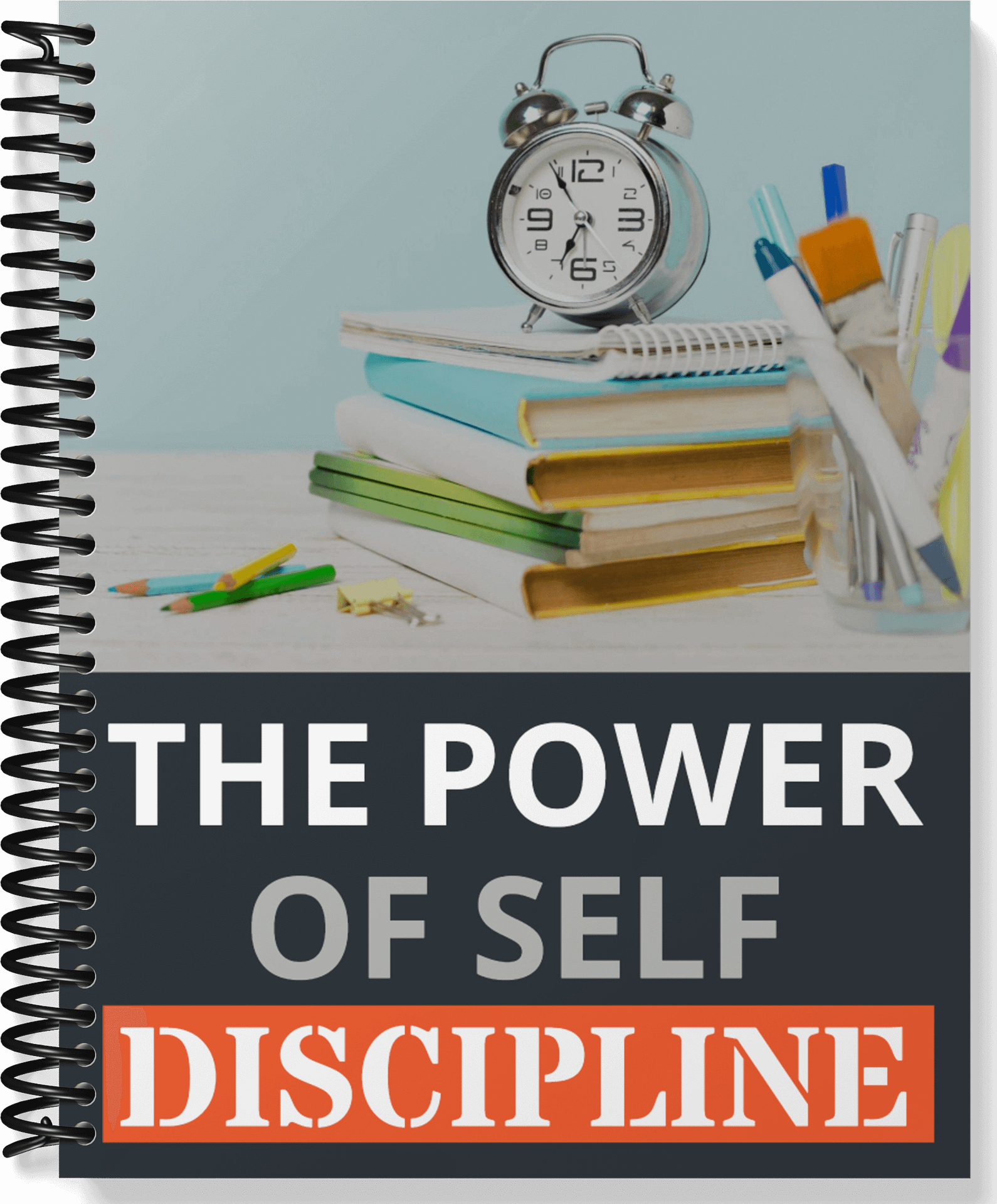
Whatever you want in life will require discipline to achieve and overcoming negative thoughts and self doubt is a small part of this. So, if you want to know more about harnessing the power of self-discipline, then check out the featured resource below for a free report; download, read it and take action 🙂

self-discipline
Continue Reading
7 Ways To Cut Costs In Your Online Marketing

7 Ways To Cut Costs In Your Online Marketing

7 Ways To Cut Costs In Your Online Marketing

There’s a common misconception that you can make money online for free. This is possible but in actuality is very difficult to pull off.

In order to have control over your online business, you’ll need your own domain, hosting, autoresponder and so on. Leveraging other people’s web properties for free will mean giving up control of your content and so on.

Building your house on rented property is NEVER a good idea and this includes using social media, such as Facebook pages or groups.

So it goes without saying that you’ll be spending money to build a successful online marketing business. That said, it’s nowhere as expensive as a brick-and-mortar business.

In fact, with around $200-$500, you’ll be able to build your very own online business from scratch and bootstrap it up to a 5 or even 6 figure business.

Below you’ll find 7 tips to help you reduce your costs so that if you’re on a tight budget, starting an online business will not seem so burdensome.

Start Small

This is the most important rule of the lot. When buying a domain name, use an affordable service like Namecheap. Choose a 1-year plan rather than choosing 5 years just because you get a discount.

When choosing hosting, go with a starter plan and pay monthly rather than paying yearly because you want a cheaper price. Use good providers such as A2Hosting or Siteground.

This is what starting small is all about. When your business is doing well, you can opt for the annual payments to enjoy cost savings – but not when you’re a beginner who’s scraping by.

Don’t Follow The Herd

The online marketing space is filled with sheep who will jump on every bandwagon that comes their way. You need to be more astute and alert.

When you’re first starting off, you may need a page builder for your sales pages. Software like OptimizePress or Thrive Architect are one-off payments that are much more affordable than Clickfunnels or Convertri.

Yet, you’ll see marketers praising the latter 2 all the time. The question now is, “Are you ready for these expensive options if you’re a beginner?”

The answer is probably no. So choose the cheaper options that work for you and reduce your recurring bills as much as you can.

Track Where Your Money Is Going

If you’re paying by PayPal, most of your recurring bills will be automated and it’s easy to lose track of your pre-approved payments.

Make a list of all the monthly expenses in your online business. You may be shocked to find that you’re paying for services you no longer use. For example, you may have a Stencil or Snappa subscription, but you’re hiring graphic designers from Fiverr.

So you’re wasting money here. By tracking your expenses, you’ll eliminate wasteful spending.

Making The Most Of Free Trials

A lot of software, tools, etc. come with free 7-day, 14-day or even 30-day trials. Make sure you use these free trials to save money – but before you sign up, ensure that you’re ready first or you’ll be wasting the trial.

For example, if you have a 30-day trial for an autoresponder, make sure your opt in pages are ready and you’re getting traffic before signing up for the 30-day trial.

In this way, you’ll hit the ground running from day 1 and build your list instead of wasting precious days getting the other components in your funnel ready.

Quality Is Important

You get what you pay for. Sometimes, it’s better to pay more for a product to get a better service. You’ll often find cheap self-hosted autoresponders sold by dodgy marketers.

Their selling point will be that you only pay a one-time fee. That’s true. But once you start using their software, you’ll find that the cheap software breaks down or has atrocious deliverability rates and so on.

You’d be better off paying monthly for a solid service like Active Campaign, or Aweber or and you’d have not wasted money on junk. You must find the balance between cost and value here and it might not always be easy.

However, if these services are making you money, and, more importantly, more money than you are paying for them, they are an investment rather than an expense.

Shop Around For A Bargain

You may find that some infoproducts, courses, etc. are priced differently in different places.

For example, you may find a PLR store selling you a resell rights product for $9. That same product may be sold in another website for $3.

This happens all the time and is no different from a can of coke costing 3X more in a cinema than at a supermarket. Shop around and see if you can get the product at a cheaper price.

Look Out For Coupons

Another way to save money will be to do a Google search for ‘product name + coupon’. You may find coupons that help you get a few dollars off.

Always be alert. Sometimes software is discounted during times like Black Friday, etc. Now is the best time to grab the opportunity and save yourself some money.

But it is important to only buy things that you will use in your business immediately. Don’t grab a bargain just for the sake of it because the likelihood is that you will never use it and probably forget that you even own it!

Alternatively, you can contact the product vendors directly and ask for discount coupons, etc. Many vendors will accede to your requests if you’re polite. If you don’t ask, the answer is always no.

At the end of the day, you want to run a lean, effective online business that makes money round the clock without incurring too many costs.

One of the easiest ways to increase your bottom-line will be to trim your expenses and when you start looking, you may be shocked at what you are wasting money on!

Constantly look for ways to do this and your business will see higher profits and you’ll be able to earn more and save more.

By the way, if you want to learn about 5 lucrative online business models you can try, from affiliate marketing, to FBA/eBay and more, check out the featured resource below for a free report that covers 5 online business models that you can choose from. Pick one and get started today… 😊

online business model
Continue Reading
Managing Ideas And Boosting Your Productivity

Managing Ideas And Boosting Your Productivity

Managing Ideas And Boosting Your Productivity

We all have a hundred different ideas that we feel could be a smashing success in our industry.

Whether it be the idea for a new product or service, there’s more ideas than there is time.

This is where you need to learn to reign in all of those ideas you have and construct an action plan that not only fleshes those ideas out so you can weed out the likely winners from the duds, but it will help you focus on boosting productivity.

Why do you need to do this?

Because it’s been proven that the human brain can’t focus on more than one thing at a time.

When we try to divide our attention, we end up scattered. Our quality also suffers. While learning to multi-task may seem like a great idea, narrowing your focus so that you’re tackling one task at a time will always produce better results.

So, what can you do when you have more ideas to grow your business than you have time for?

Begin by jotting down the top ideas that come to mind.  Don’t write summaries or get carried away with hashing out the details. Instead, write down titles for each idea.

Then, tear them apart, one-by-one. Be realistic with your expectations and the time you have to spend on each project.  Think about your core audience and what they’d be most interested in.

Create a priority list based on all the ideas you have.  Again, keep your audience in mind because the ideas you have may not align with what your market is actively looking for.

Thinking about ways to maximize your outreach, further your brand and provide additional value to your market is important but if you’re struggling to focus, you need a way of segmenting these ideas so that they make better sense. 

Otherwise, you’ll spend more time thinking about and analyzing ideas, versus bringing those ideas to life.

A project management system is a great tool when it comes to not only fleshing out potential ideas but in staying on track with the projects you’re working on.

Day-to-day operations can be exhausting to keep track of. With a system in place that makes it easy for you to assign value to projects, allocate time and be able to generate a quick snapshot at where you are during each project will make it easier to stay focused on your end goals.

There are countless project management tools available to you including Asana and Basecamp.

You can easily create schedules using Google Calendar found here:

https://gsuite.google.com/learning-center/tips/calendar

More Tips & Strategies To Increase Focus And Productivity

By now you probably realise that there are different ways you can improve focus and subsequently, increase productivity and quality output and I have covered a number of them in this and other blog posts.

And now I want to give you a few more tips and strategies that I hope will help you. You can never have enough ways to boost your productivity, right?

Commit To One Thing At A Time

Previously I have mentioned the importance of narrowing your focus down to one main goal at a time since it’s been proven that our brain responds better when we are working on one project at a time, rather than attempting to multi-task.

So, begin by choosing just one idea, create a schedule that includes goal-based milestones, allocate time to each task and get started!

Use project management tools such as Asana or Basecamp to help you stay on track.

Prioritize Your Goals

What projects aren’t panning out? What do you feel is less likely to be a success?

What tasks could be wiped off the to-do list? Take a step back and evaluate the things you’re spending your time on, staying on the lookout for ways to free up your time and improve your focus.

Work On Only What You Love

This is an important one when it comes to staying focused. If you’re finding yourself burned out working on tasks that you are simply not interested in, chances are the quality of your projects won’t be up to par.

Instead, learn to delegate the tasks that you don’t personally enjoy. Not only will you be able to increase output, but you’ll be able to provide a higher level of quality to your customer base by turning to the experts.

Consult with Experts & Mentors

Struggling to complete a task because you lost focus?

Consult a mentor! Not only can this person hold you accountable for the time you spend on projects, but they can be a powerful guiding force throughout your business and help shape the foundation for your brand.

And finally…

Give Yourself A Break!

We all struggle with focusing on tasks, especially repetitive or mundane ones. Even the most organized  of us all has those moments where no matter what we do to try to refocus on our goals, it feels as though we’ll never get ahead.

So cut yourself some slack when this happens. Acknowledge the fact that you can only do so much.  Sometimes taking a step back and giving ourselves permission to simply take a creative break is enough to boost productivity and re-focus on the bigger picture.

Creating laser focus and becoming a productivity machine takes practice and effort and you need to find ways to help minimize those distractions that may be holding you back from focusing on what is most important.

Here are some steps to take that may help you with that:

  • Identify those time killers
  • Don’t forget that the best way to be productive is to take care of yourself.
  • Clear your workspace of clutter.
  • Use some of the productivity apps listed.
  • Practice Deep Work techniques that will help you focus.
  • Don’t forget to reward yourself!

Well, as I’m sure you can appreciate, there is a lot more to be learnt about increasing focus and productivity; far more than can be covered in this short post, but if you’d like to know more about this, then click on the featured resource below where you can pick up a free report, Stay Focused For Success, that covers this topic in more detail. Download, read it and take action 😊

Continue Reading
The Easiest Blog Post You Will Ever Write

The Easiest Blog Post You Will Ever Write

The Easiest Blog Post You Will Ever Write

Writing your own original articles and blog posts is mandatory if you own a list or run an internet business. Blogging is risk free and should be part of any online business.

Mandatory. Part of your standard operating procedures. A basic staple. Something you can’t do without. You get the picture.

Blog articles can be used in so many ways that I’d need to write an article just to explain all the ways you can profit from articles. 🙂

More on that another day.


By the way, if you are serious and want to take your blogging to the next level, check out the Rapid Blogging Blueprint. This is a premium level training that takes you through each and every step of setting up your own highly profitable blog and profiting from it. You can check it out here.


In today’s post I’m going to show you how to write an incredibly easy blog article that is specifically for beginners within your market.

The idea in a nutshell is this –

Answer a set of three basic questions related to a topic relevant to your target audience.

If you can answer just three simple questions, you can crank out article after article for newbies in your particular field of interest or expertise.

These three questions are –

  1. What is _________?
  2. Can you show me an example of _________?
  3. How can I get started with _________?

Let me walk you through writing an article with these questions as the backbone of your content.

Before we get into the 7 very easy steps, let’s take just a quick look at the schematics of your article. In order to write an 800-1000 word article, your basic needs for the various parts of the article would look something like this…

Opening (125 Words)
Question #1 (250 Words)
Question #2 (250 Words)
Question #3 (250 Words)
Closing (125 Words)
_______________________

Total = 1000 Words

Now, on with the show…

1. Determine Your Title

Most people don’t spend much time on their title and that’s a no-no. It’s a flagrant foul in basketball. A bounced check. A driver cutting you off in traffic. Things that are mindless.

As with everything I ever say about writing articles, your title is important. Very important. Imagine this scenario…

You’re searching the internet for blogs or sifting through articles at your favorite directory in hopes of finding some useful tips for selecting curriculum for your upcoming homeschooling year.

Which of these would you take a closer look at…

  • The Easiest Way To Choose Your Curriculum
  • Making Your Curriculum Choice
  • 5 Questions To Ask When Choosing Curriculum
  • Homeschool Book Decisions
  • Choosing Your Homeschool Resources

While all of these are related to choosing your homeschool curriculum, “The Easiest Way…” and “5 Questions To Ask…” probably have more appeal. If you’re pressed for time, you probably aren’t going to read all five … you might read two.

And the title is going to determine which two gets your attention.

So, first things first, it’s important that you create an appealing title. We’ll talk more about this in another lesson, but three simple “rules” that I go by in crafting titles that I’d like to pass on to you are…

  • Be specific. It’s not “Questions To Ask”, it’s “5 Questions To Ask”. It’s not, “Lose Pounds”, it’s “Lose 3 Pounds in 7 Days”.
  • Make It Simple. Who would ever read an article, “7 Extremely Hard Ways To Lose Weight”? Or, “Top 10 Most Difficult Ways To Find A Date For Valentine’s Day”? Offer SIMPLE solutions. EASY ways to accomplish a desired result.
  • Speak To A Group. If your article is intended for a specific group (I.E. Beginners, WAHMs, Christians, Senior Citizens, College Students, etc.) then say so in your title. Rather than “How To Write An Ebook”, go with “The Beginners’ Guide to Writing An eBook” or “How To Write a Christian eBook”.

So, determine your title and then begin the writing process.

Hint: Go to good old EzineArticles.com and review the titles of other articles (paying particular attention to which articles are viewed the most – indicating their popularity) and then use those titles to model your own after. I.E. If you see the popular title, “The Easiest Way To Lose 10 Pounds And Get In Shape Fast!” you could easily entitle your own article, “The Easiest Way To Learn Guitar And Play Songs Fast!”

And don’t forget Amazon.com. Go and find the bestselling books in your niche and take a look at the Table Of Contents for more inspiration for articles.

2. Write Your Opening

You’ve got about 30 seconds to get your reader’s attention if you’re going to get them to consume your entire article. That’s not much. It’s important that you get them interested quickly. I’m going to share three to get you started…

  • “There must be some reason why some _________ outperform others.” . This opening is all about informing the reader that some people have an advantage over others. And, in order to level the playing field, they need to follow the advice in your article. Example: “There must be some reason why certain tennis players win more matches than others. Said another way, if two equally skilled tennis player compete … why does one get to go home a winner and the other a loser?”
  • “I’ve always been impressed with those who could __________.” . This opening allows you to mention a specific result that is desired to, not only you, but the reader as well. Your article teaches the person how they too can experience the desired result. Example: “I’ve always been impressed with those who could hit a backhand winner on the run. It never came easy to me and I have marveled many times when others seem to hit that shot so effortlessly. Then, I figured out their secret…”
  • “Do you find yourself _________?” This opening is a good one because it allows the reader to identify with what you’re writing about. When they say “yes” to your question, then they know the article is for them … and they’ll read on to discover what they can do about the problem they face. Example: “Do you find yourself double-faulting a lot? For years I gave away point after point – usually in critical times during my matches – by hitting into the net or just beyond the service box. Finally, I paid for a lesson from the local pro and this is what he taught me…”

Choose one of these openings (or one from the related article coming tomorrow) and write approximately 125 words as your introduction to the article. Be sure to transition from your opening into your first question.

You can do this in one of two ways: (a) Specifically mention that you’ll be answering the three most asked questions from beginners, or (b) Simply answer the questions without ever actually posing the questions in the text of your article.

3. Answer Question #1

If you’ll recall from earlier, question number one is…

“What is _________ ?”

Simply plug in the topic of your article into that question … and then answer it in approximately 250 words.

  • What is tennis strategy?
  • What is podcasting?
  • What is virtual real estate?
  • What is forex trading?
  • What is retinopathy?
  • What is a VoIP phone?
  • What is Tai Chi?

Give a brief explanation of the topic in your own words and then move on to the next question which builds upon the first question.

4. Answer Question #2


That question again is…

“Can you show me an example of ________?”

Now the article is taking shape. We go from an introduction to an explanation and now we have an illustration. You’ve explained what it is and now you’ll explain what it looks like. Provide an example. A case study. An illustration. A method. Something the reader can identify with to better understand what you’re saying.

  • You’ve explained what tennis strategy is … now give a scenario in which tennis strategy is at work.
  • You’ve explained what virtual real estate is … now give an example piece of VRE property.
  • You’ve explained what Tai Chi is … now share one of the key moves of the discipline.

After providing some sort of example, move on to question number three…

5. Answer Question #3

From earlier in our lesson, the final question is…

“How can I get started with __________? “

It all climaxes with 1-3 simple steps the reader can follow in order to begin practicing your teaching.

By this point the reader knows WHAT the topic is about, and they know a basic use or function of the topic. Now, they need a simple explanation of how they can get started with application. How can they use the information?

You can either give the reader ONE action step to take in order to get started (I.E. The first thing you’ll want to do is enroll in a class.) or you can provide them with a simple set of THREE steps to put into practice as a sort of mini-system (I.E. Step

One is… Step Two is… Step Three is…).

6. Decide Upon A Close
To complete your article, you’ll want to use your final 125 words (approximately) to close out your content. There are two components of the article close that I think are necessities if you want to see any results from your efforts.

  • The Spark. You want to leave the reader with a desire to get started. You want them excited. You want them motivated. You want them to take action. I’m not necessarily talking about giving them a rah-rah pep talk (although that might not hurt either!). I’m speaking of getting them to realize that they can get the desired results they want if they’ll get busy doing something. Your job at the close of the article is to encourage them (gently or blatantly) and challenge them to achieve.
  • The Segway. The other thing you must do during your close is to lead into your resource box. Your article is for the reader. Your resource box is for you. Your content is to provide useful information for the reader. Your resource box is to get the reader to a point where you present an offer. And the closing of your article is the place where the two roads meet. Lead the reader to a decision to make a positive change in their life – to take action. And then use your resource box to provide a means to do just that.

7. Create A Featured Resource Box

Most people use the same generic resource box with each of their articles. In other words, it’s the same resource box regardless of what the article is about.

That’s a big mistake in my opinion.

With an ever-changing audience reading articles about ever-changing topics why would you want to use a never-changing resource box?

Your resource box – in order to be truly effective – must be a continuation of the article itself. It must offer something more that is directly related to the content of the article.

I mean, think about it: the reader has warmed up to you at this point. You’ve shared something useful. They like your style. They are pumped up and ready to take action. Why blow that moment with a resource box that does nothing to really enhance or continue or build upon where they are at this moment in time?

Let me give you an example:

If I’ve just explained what tennis strategy is about, pointed them to an example of tennis strategy and briefly outlined how they can create their own tennis strategy – which is more effective at this point…

  • Jason Daly is the publisher of Tennis Tips, a free weekly newsletter full of informative helps for tennis players of all skill levels. For your free subscription, drop by http://www.JasonsTennisTips.com today.
  • Jason Daly is the author of How To Outplay Your Opponents By Outsmarting Them, a free strategy report for tennis players of all skill levels. Grab your complimentary copy at http://www.JasonsStrategyReport.com today.

Obviously, having just read the article on tennis strategy, you’d be more likely to take action if resource box #2 was in place … because it’s a continuation of the article. It’s part 2. The sequel. The rest of the story.

Note: And, upon visiting my site and registering for the free report, you’re automatically going to receive my free newsletter as well anyway.

The point is this: a carefully crafted resource box — one that is specifically relevant to the article itself — will outperform a generic resource box. You’ll get more results by using a resource box that builds upon what’s been shared in the article it is attached to.

So, that’s an incredibly easy way to write a good blog article.

You can crank out an entire series of these articles for beginners. All you need to do is answer three simple questions.

  1. What is _________?
  2. Can you show me an example of _________?
  3. How can I get started with _________?

It works for any niche. Any topic. Any person. So what are you waiting for?

If you really want to know more about the power of blogging, you can take a look at the Rapid Blogging Blueprint training course or if you just want a few pointers for now you can grab the featured resource below for a  free blogging report; download, read it and take action 🙂

blogging
Continue Reading
Five Benefits Of Having A Success Mindset

Five Benefits Of Having A Success Mindset

Five Benefits Of Having A Success Mindset

Are you ready to start getting more out of your life and to start getting the results you want? For many of us, success is a very slow process and one that involves a huge amount of work and effort.

For others, it all seems to come very naturally. We all know those people, the ones who seem to have the Midas touch – who seem to strike lucky no matter what they do. What’s their secret?

There are many answers to this question but the biggest thing these people often have going for them is a ‘success mindset’. Once they change the way they think, they can change their fortunes – and the rest just falls into place.

It’s making that cognitive shift that will help you to start making the progress you want to see in your life and moving away from a fixed mindset to a growth mindset. And here are five of the biggest ways that changing your outlook can change your fortunes…

Problems Become Challenges

A success mindset turns problems into challenges.

It means that you stop seeing setbacks as the end of the world and start seeing them as new opportunities to kick ass and take names!

When you take this approach, nothing can stand in your way!

And Failures Become Learning Experiences

You might have this idea in your head that highly successful people can never put a foot wrong or make a mistake. That’s far from the truth though.

However, what makes failure very different for those with a success mindset is that they don’t see it as failure.

They see it as a chance to try again – now with new information!

You Feel Amazing

When you genuinely believe you can do anything, it doesn’t just affect the way you walk around the office and conduct yourself in business.

It changes the way that you present yourself and feel about yourself. In short, you feel awesome.

You Become Instantly More Attractive

What is the secret to attractiveness in both genders? You guessed it: confidence!

People who are confident tend to be more charismatic and positive, so others will naturally tend to gravitate towards them.

You Finally Start Getting What You Want

Finally, when you adopt an open mindset for success and everything that comes with that, you’ll finally start to get what you want.

Better yet, it won’t seem like an impossible task anymore. Once you give off that iron self-belief, others will start to believe in you too.

When you have a clear goal and mission, anything becomes possible. It’s just a matter of time.

Top Five Challenges Of Creating A Success Mindset

‘Create a success mindset’ they say.

‘Just go after the things you want in life’ they say!

‘Take risks’ they say…

It’s a shame it’s not always that easy right? The road to a success mindset is one wrought with obstacles and many of these are things that nobody likes to talk about. It doesn’t fit the narrative. It’s time we addressed them.

Some people seem to be able to rewire their mind with ease, but for others it can be a real struggle to change the way they think from negative to positive.

Here are the top five challenges of creating a success mindset:

You Don’t Know What You Want

This is a surprisingly common issue and one that rarely gets brought up.

How can you go after what makes you happy if you don’t really know what that is? How can you find a goal and stick to it when you fear commitment?

Clarity is key to changing the way you think; once you know what you want, you can put your efforts into achieving it, but it you aren’t really sure about what you want, you will make excuses to procrastinate, and you’ll never make any progress.

Having Weird Aims

Or what if you know what you want in life, but your aims are just too weird or unattainable? What if you don’t want to start a business, travel or start a family. What if you want to be an acrobat? And you’re 60?

What if everyone will laugh at you?

I’m not saying that you should restrict yourself, but you need to be realistic.

That being said, if you have a major goal to achieve, try breaking it down so you can reach these smaller goals on the way and enjoy the success journey you are on.

If you want to know more about enjoying the journey, check out this training because it is important to not just enjoy the end goal but also the whole process: Enjoy The Journey

Being Conflicted

Or how about being torn between travelling and settling down with the person you love?

What if your heart is genuinely pulling you in two different directions?

What if going after your dream, means saying goodbye to people you love, or turning your back on the things that made you who you are?

This is where clarity can help, but ultimately you need to decide what is most important to yourself.

Being Honest With Yourself

We are prideful creatures, and our very psychology is wired in such a way as to protect our fragile egos. We don’t want to admit to our failures, and we don’t want to feel like we’re going backward.

And so when we realize that we’re unhappy with what we have in life, it can be very hard for us to be honest and admit that – to ourselves or to others!

And it’s even more difficult to blame the person in the mirror, but the responsibility for your own path in life is ultimately yours!

Responsibility to Others

It’s easy to say that you should take a leap and apologise later but what if people are really relying on you to be mature and stable?

What if your goal is to go travelling but your wife just got pregnant? Yes, there are ways around this too – you can explain how important this is to you and convince her to come with you.

But it won’t always work. And at the end of the day, you’re always going to be giving your child a less stable home.

There are answers to all these problems of course – but just know that the path isn’t as simple as some would have you believe!

If you want to know more about changing the way you think, check out the featured resource below for a free Strong Mindset report; download, read it and take action 😊

Continue Reading
Optimized by Optimole