
Articles
Benefits Of Branding Your Business
Benefits Of Branding Your Business
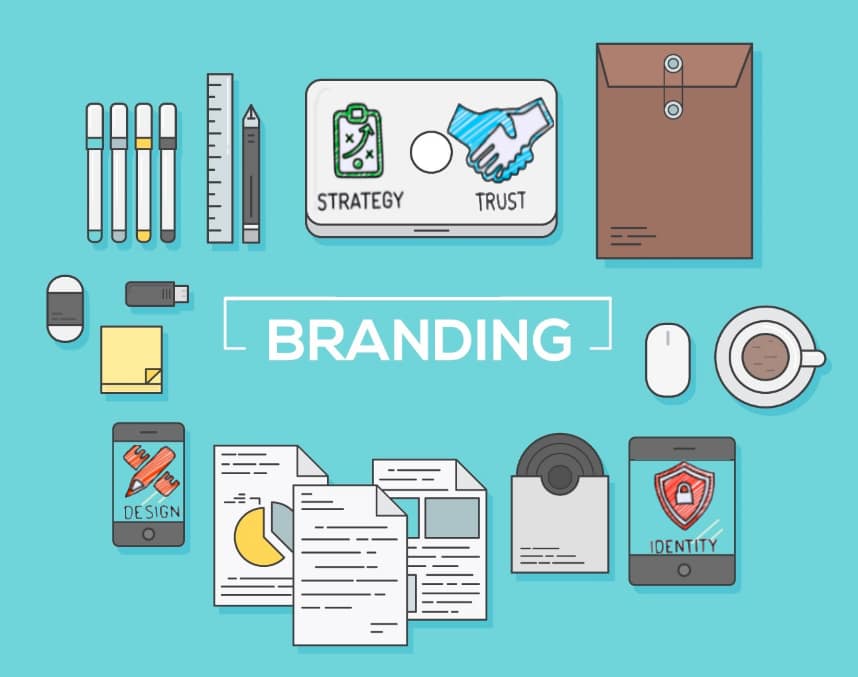
Almost every business has a trading name, from the solopreneur to the largest multi-national corporation but it would be fair to say that only a small minority of those businesses would have what could be classed as a brand.
Branding is the process of creating distinctive and long-lasting perceptions in the minds of consumers. A brand is a persistent, unique business identity including aspects of personality, quality, origin, liking and more.
Although most people will associate brands with big companies, even a small business can use branding techniques to great effect.
So what is branding?
Well, the basic concept of branding and identity is quite simple; it is to create a look and feel immediately identifiable and recognizable in their niche. Good branding can increase the value of the product/service that the company provides and also the company itself. A company’s identity in their marketplace can have a huge impact on their profitability.
Many people think of branding as just a company logo and/or colour scheme, but it goes much deeper than that. Your brand should be built around a core mission statement that reflects your values as an individual or company.
BONDING
Having a strong brand helps you to bond with your customers and prospects providing that your brand resonates with your target audience. If your core beliefs and values as a brand are in line with your target market, this can build an incredibly powerful bond with them which shouldn’t be underestimated.
It is human nature to flock to those who reflect our own core beliefs and values, so your brand should be built around these to attract the right consumer and repel those who won’t resonate with you.
RECOGNITION
This is one of the main benefits of branding; customers and prospects are much more likely to remember your business. A strong brand name and logo/image helps to keep your company image in the mind of your potential customers.
If your business sells products that are often bought on impulse, a customer recognising your brand could mean the difference between no-sale and a sale. Even if the customer was not aware that you sell a particular product, if they trust your brand, they are likely to trust you with unfamiliar products. If a customer is happy with your products or services, a brand helps to build customer loyalty across your business.
ACCEPTANCE
If a business develops a strong brand this can have a knock-on effect in that they become accepted as a “player” in their niche and this in turn can build preference for their products. Think about it; when consumers are faced with choices in a store, they will typically favour a brand they have purchased before and trust. This is plain common sense as they can know exactly what to expect from their purchase. This is an important advantage if you sell products that customers purchase frequently, such as food or other household products. In that sense, a strong brand makes an important contribution to customer loyalty and, just as importantly, your profits!
NECESSARY
If you can develop a strong brand strategy, you can become a necessity in your customers eyes. This means that you have been able to build true brand awareness and loyalty. This should be a long-term goal for any branding strategy as it will virtually guarantee your success when people start evangelising about your brand and its products or services.
DESIRE
At first glance this may appear to be identical to “NECESSARY” above but when it comes to desire, we are talking about positioning yourself as a desirable, even luxury, brand. A classic example here is Apple. In all honesty, Apple products are NOT truly innovative (although the iPod was when it was first launched) and yet they have raving fans (discussed in “NECESSARY” above). The differentiator here is that these raving fans are willing to pay a premium for these Apple products and this is mainly due to the fact that when the original iPod was launched it was truly innovative. This one product launch has basically enabled Apple to position itself as a desirable, luxury brand and are able to charge premium prices. This may be the ultimate goal for any business, but many will not succeed, but don’t lose hope because just be being “NECESSARY” you will have an extremely stable and profitable business.
Did you notice that the above points spelt out B.R.A.N.D?
Are there any disadvantages to branding?
Having a strong brand will almost always be a positive attribute BUT there are a couple of instances where this may work against you.
Negative Attributes
If somebody using your product or service experiences a negative event, that will inevitably become attached to the brand. For example, a massive recall or unintentionally offensive ad campaign can tarnish a company’s brand and image, and this may result in the company to needing to completely rebrand itself to recapture its place in the market. And in todays totally connected world of social media, if somebody starts bad mouthing you or your product or service, it can be devastating.
Can Become Too Common
Many brands strive to be No. 1 in the minds of consumers. Take Coca-Cola as an example; many people may request a Coke when they go to a restaurant, but this may not necessarily mean a Coca-Cola product, but any soda i.e. it has become part of the vernacular. While it is the goal of branding to become the standard, it is not the goal to become the generic term of a line of products.
Ok there you have it, branding in a nutshell.
If you want to learn more about branding, I have a free report giving you a lot more information than I have covered here. Click here to get access to the report:
If you are serious about branding your business then I urge you to watch this special video training all about branding and how it should fit into your overall business strategy. You can access the video training here:

How To Start Your Own Coaching Business
OK, so you are interested in becoming a coach and helping others to succeed; that’s great but how do you go about getting started in the first place?
Before you start, let’s take a quick look at the pro’s and cons of running your own coaching business so you can decide whether this is an avenue you really want to pursue.
The pro’s of coaching
This could be quite a lengthy list as coaching is a business that anyone can embark upon, but here are five of the top benefits to becoming a coach:
- Anyone with people skills and the ability to help can become a coach. As long as you are an expert at something you can coach someone to become an expert too. Although it’s recommended you take some courses and get certified, the coaching profession isn’t highly regulated yet, which means anyone can call themselves a coach (perhaps this could be called a con too)!
- You can start small so it is actually quite affordable to get your coaching business off the ground. Odds are you already have the equipment needed to start; a computer. You can download Skype for free and buy a quality set of headphones for under $50. You should also have a website, coaching contract and perhaps homework materials, but again, those can all be had for less than $100.
- You can feel good about helping people in the area you coach in. There is nothing better than helping someone who is stuck in an area of their life or business and seeing them progress forward.
- You can do individual and/or group coaching. Especially for people who can’t afford one-on-one time with you, group coaching allows them a way to work with you and you to be able to help more people in less time. And if you are a business coach, as they see the benefits and results in higher profits, they will probably be able to invest more into coaching and pay to access you on an individual basis.
- You can offer add-on products or services to further assist your clients. Many coaches have books and home study products and this offshoot can generate an extremely lucrative business in itself and you can reach far more people who, once again, may seek out more access to you as they progress and see results.
The cons of coaching
- As stated in the pro’s list above, although certification is not currently required, getting certified can certainly increase your credibility and marketability. But, of course, getting a coaching certification takes time and money and this needs to be taken into consideration.
- You do need to have great people skills and patience. Just because people come to you for help, doesn’t mean they’ll do what you suggest, even if it is in their own best interests. In fact, many people are fearful and resistant to change, so you need to be able to support, encourage and sometimes challenge your clients to make needed changes to have the breakthrough they desire.
- You’ll spend a lot of time on the phone or video conferencing. If you don’t mind having many appointments a day, that won’t be a problem (this is where having an information business on the side will alleviate this issue).
- You need to be in top form whenever you’re with clients. You might feel bad/sick, have a personal issue or other difficulties in your life, but when you’re with a client, you need to be “on” no matter what and laser focused on them 100%. Remember that as a coach you will ultimately be judged on the results you get for your clients.
- It can take a while to build a solid, stable business. Getting your first clients can be tricky, but you can offer discounted or even free sessions to get them in through the door to show them the value you offer and to hook them. But this does take time and perseverance, although this can be argued the same for any business!
Now, before you even think about starting up a coaching business you need a thorough understanding and acceptance of who you are. Don’t forget that the most valuable resource you have in your business is you. It’s the one thing your business cannot do without. Take time to really understand what makes you tick, how you ended up where you are and who you want to be for the rest of your life. Yes, your business will provide an income (hopefully), but it’s also an opportunity for fun and fulfilment.
All great creations start with a dream. You have permission to dream about what you want, where you want to go, who you want to work with. Make this dream as real as possible, use all your senses. Yes, create a vision board and mind map. Test drive that dream car. Record your dream in a way that you can revisit it as often as you need for inspiration. Then check how comfortably your business fits in to your dream. And this is important, if it does not fit, then you need adjust your business, not your dream.
Still here, good! Now let’s take a look at a few personal qualities that you will need to succeed as a coach:
You Are Happy To Invest In Yourself
To succeed as a coach, you must not be afraid to invest in yourself consistently. Take a look around and you will see that this is a trait shared by the best coaches. Think about it; if you aren’t willing to invest in yourself, why should a client invest in you? You can’t help others see their blind spots if you can’t see your own. The best coaches are constantly getting support from other coaches.
You Need To Have (Or Develop) A Business Mindset
Too many coaches only want to coach. That motivation and passion is critical, but as a coach, you’re also a solopreneur. For better or worse, the stamina you have for coaching has to transfer over into maintaining the bottom line, and no matter what, running a business is serious work. This means personal branding, social media strategy, writing articles, speaking to audiences – and that isn’t even delving into the financial management and bookkeeping elements of running a business. It’s not about whether you can do it, it’s about whether you can enjoy it enough to do it. The major reason that many coaches fail is not because they can’t coach enough clients, but rather because they lack a strategic business plan. Seeing clients is a small slice of it… a good coach gets and enjoys all aspects of the business, especially the marketing.
You Are A Good Listener
Studies show that listening skills can actually boost economic success, yet coaches often fail to apply this in their own practice. The worst coaches are focused only on feeding you information whereas a great coach has the skills to facilitate a shift in your mindset and perspective, which is only possible by really listening to you and understanding you at a deep level. Once that inner shift occurs, it is reflected back with massive powerful results which will ultimately benefit both coach and client.
Ok, so you have got this far and you are definitely invested into becoming a coach. Here are 7 quick steps you can use to get going.
Step 1: What Type Of Coach?
You are probably aware that life and business coaching are extremely popular, but they aren’t the only types of coaching you can do. If you are in the fitness niche you can become a weight loss, fitness or health coach. What about a sports coach? You can also become a parenting or relationship coach, organizational or productivity coach, technical coach, sales coach or a career coach. Where is your area of expertise and work from there?
Step 2: Set up Your Business/Company
Decide your business structure, create a business name and get a business license if required. Write a coaching contract that outlines your services and expectations.
Step 3: Invest In Your Coaching Equipment
If you’re going to be doing video conferencing, download the needed software and purchase a quality headset and webcam. Some coaches record calls and give them to their clients so they can review the session. If you want to do that, you’ll need to get a recorder that will record your video/audio calls. You can use Skype which is free to hold these types of calls. If you want to run group sessions, you could run weekly webinars etc. so you will need to invest in webinar software. Whatever you do, it is important that people can hear you clearly so invest in a quality microphone such as the Blue Yeti.
Step 4: Build Your Website
Potential clients need a place to learn about your coaching business and there’s no better place to sell your coaching and related materials than on a website.
You will need to purchase hosting and a domain name (preferably the name of your coaching company). Using WordPress, you can quickly get a website live online and customise the look and feel through various plugins and themes. If you aren’t very techy, you can outsource this to freelance sites such as Fiverr.com or Upwork.com and get someone to install and set this up for you (remember that this is an investment in your business and not a cost).
Write content that is client-focused on how you can help them improve their lives. Once you have testimonials, post them on your website as social proof is very powerful.
Step 5: Develop A Marketing Strategy
Do thorough market research to figure out your ideal client and where you can find them and then develop specific marketing strategies to lure them to your business. For example, if you’re a business oriented coach, you should develop a LinkedIn profile. If you’re a personal training coach, you might want to have videos on YouTube that offer fitness tips or teach specific exercises etc. Really delve into your market and understand what makes them tick, their hopes and fears, and determine how you can position yourself as the answer to those hopes and fears.
Step 6: Keep On Marketing!
In all honesty getting your first client will likely be the hardest. Use your personal and professional network to help. Like I have already stated in this article, consider offering a heavily discounted, or even better, a free 15 or 30-minute coaching session to entice people to try you out. Deliver as much value as you possibly can during these sessions as your business could depend on it. Just because they are free, doesn’t mean you should hold back. Help them as much as you can, and once they see the benefit and that you are genuinely interested in helping them, hopefully the decision to invest in you becomes a no-brainer.
Step 7: Be The Best Coach That You Can!
This may seem to be obvious but it needs to be stated. Coaching isn’t a business to take lightly. People are entrusting their emotional and possibility their physical well-being to you. You also owe it to them to stay on top of current trends in your industry, as well as best practices for coaches.
Remember that ultimately you will be judged on the results you achieve for your clients, so give them 100% and as they see the results, you will probably get referrals and your coaching business will soar. You could become the go-to coach in your niche with all the recognition and kudos that brings, and you know that you are affecting many people’s lives for the better and there is no greater feeling that that!
I hope this post has given you some insight into the benefits that starting your own coaching business can give to you. If you want to learn more about starting your own coaching business, I have also recorded some video training that you can see here: warr.us/atgmen1
The Benefits of Personal Coaching

As a successful entrepreneur or business person, you probably know exactly what you want and how to get it. You are driven, determined and a self-starter. So if you have all these great qualities, why would you need a coach?
10 Real World Benefits of Coaching
The personal benefits of coaching are as wide-ranging as the individuals involved. Many clients report that coaching has positively impacted their careers as well as their lives in many ways. Here are ten of the many ways that having a coach will benefit you.
1. Establish and take action towards achieving goals:
This is especially important for introverted entrepreneurs and solopreneurs who run online businesses as it’s easy to become enmeshed in your own business world. A business coach will push you to step outside your comfort zone, meet new people and try new things in your business. Even extroverted entrepreneurs can get caught in ruts and a business coach will push you out of them and force you to take action to strive towards your goals.
2. Regain clarity:
When you decide to become an entrepreneur, you start with great dreams and aspirations of growing a business, hoping to achieve great things. As the months and sometimes even the years go by, you start realizing that your business is yet to become what you had initially envisioned, and you have yet to implement all the ambitious action plans you once thought of. You may start seeing that you are so caught up in the day-to-day running of the business that you find little time to think and plan a strategy. Working with a coach will help you raise your head from the day-to-day business race and look at the bigger picture. Your coach will get you to start thinking about the future, where do you see yourself and your business, and get you to act on this vision by developing a winning strategy that you can execute with confidence.
3. Become more self-reliant:
The one aspect that a coach brings that group sessions or mentors do not, is a keen awareness of your entire business and way of being. There are few times when someone is going to focus just on you for an entire hour, probing you about something that happened last quarter, an employee issue you had three weeks ago or your style of leadership. By being totally focused on you, a good coach can show you the way and when you take the necessary action you will become far more self reliant when running your business, and your confidence will soar and you are on an upwards success spiral.
4. Increased Productivity:
Professional coaching maximizes potential and, therefore, unlocks latent sources of productivity. To be successful and to get to a point where you haven’t been before, you need to do something you haven’t done before. And this is really what separates real successful entrepreneurs from mediocre ones. A good coach will not only motivate and encourage you, he/she will point out the things you are good at but most importantly he/she will point out the things that you are not exceeding in and you need to improve. We all have blind spots and often the more successful we are, the harder it becomes to highlight and accept our shortcomings. Identifying blind spots means that you get to work on areas of yourself you haven’t addressed before, which will result in becoming more productive and more aware about you need to do to lead a more fulfilling life.
5. Positive attitude and increased self-confidence:
Building the self-confidence of employees to face challenges is critical in meeting organizational demands and you will get much more done if the people around you are positive and uplifting, rather than negative people who are always complaining and wear you down.
6. Greater responsibility and accountability for actions and commitments:
A coach will not only push you and challenge you to do and achieve your best, but will also hold you accountable for your actions. An experienced coach is able to detect when you are lying to yourself and when you are sugarcoating existing realities in order to avoid the pain of taking action.
This leads to –
7. Return on Investment:
Coaching generates learning and clarity for forward action with a commitment to measurable outcomes.The vast majority of companies (86%) say they at least made their investment back.
8. Work more easily and productively with others:
Finding ways to do tasks more quickly and efficiently and understanding that is a process worth investing your time in is an important skill and this includes working well with others and, perhaps more importantly, being able to delegate tasks to others (especially when you may feel like it would be easier to do it yourself). You need to think about the bigger picture, the long-term results of investing the time to train and delegate tasks to others.
9. Communicate more effectively by voicing your frustrations:
Whether you are a solopreneur or you have a team around you, there will always be certain things that you may not be able to share with those around you for a number of reasons. In a coaching relationship, you can share your concerns with the coach, knowing that you are in a confidential setting; your coach is always your biggest advocate and wants you to succeed in whatever you set out to.
10. Coaching provides an invaluable space for personal development:
This is an important, but often overlooked benefit, especially in the corporate world but is just as important for a company as an individual. Take this for example; managers frequently have to deal with employees struggling with low confidence. The traditional approach would be to send them to an assertiveness course and hope this addresses the issue. In the short-term, the employee learns new strategies for communicating which may improve confidence. Unfortunately, in isolation these courses rarely produce a sustained increase in confidence. Although external behavior may change; it needs to be supported by changes in their internal thought processes. This is often where coaching is most effective and it can be tailored to the individuals needs.
Okay, there you have it. Ten top ways that coaching can benefit you.
Do you have the knowledge and expertise in your niche that would enable you to become a coach? There is no greater feeling than helping others to succeed. If you would like to learn more about how you can start your own coaching program/business, take a look at Mentoring Magic here: warr.us/atgmen1
What Is Your Online Marketing Strategy?
Every business today should have a strong online presence. This will allow you to potentially reach out to more customers than you would with regular marketing methods. A solid online strategy will allow you to increase your business image, send more traffic to your site and promote customer awareness.
There are various marketing strategies that you should implement to achieve this. Use the following tips to help you plan a strategy that will give you results.
Develop a Marketing Message
You should work on creating methods that clearly project your marketing message. This needs to be done in such a way that your audience clearly knows what message you are sending. Work on understanding what your message is first, then practice writing it out so that it becomes super clear.
Who is Your Target Market?
This aspect is vital and should not be overlooked. Take the time to research who it is your products or services are targeting. It is not always the group that you first had in mind. Learn how they operate, how they think, their wants and desires. By doing this you will discover ways that you can easily market to them. Without this knowledge your marketing strategy will not be as successful as it could be.
It really can’t be stressed enough how important market research is to the success of your business. Understanding your market will guarantee that you are providing the right products and services to your audience, ones that they will be interested in purchasing and at a price point that they are willing to pay.
Without researching your market, you’re just shooting in the dark. With the right type of market research, you’re shining a bright light on your target so you’ll be a lot more likely to be successful.
It Helps You Focus on What’s Most Important
When you conduct market research, it will help you focus on what’s most important to your audience and therefore to you. You cannot make assumptions about your market without confirming them by researching the situation. You might find out that your ideas are wrong or you might find out they’re correct.
It Helps You To Understand Your Audience
You might think that you can wing it, but if you don’t know everything about your audience that you can, you may make a mistake. For instance, one-time Coke thought it was a good idea to come out with “New Coke” without really learning about what their audience would think about that. It was a colossal failure.
It Helps You To Understand Which Path Is the Most Profitable
When you learn more about your market, you’ll be able to create even better products and services that your audience really wants. In fact, they will think that you’re able to read minds and will clamor to buy what you’re selling.
It Enables You To Become Adaptable
Even when you are marketing to the same general demographic, the morals, views, thoughts, and ideals of a demographic changes over time. That’s why companies that have been around for ages have to change their marketing plans and advertising periodically, because people change.
It Helps in Decision-Making
Having the right information in front of you will help you make a lot better choices for your business and your audience. After all, decisions made with no information, the wrong information, or assumptions will almost always be wrong. Having the right information is going to make your choices so much better.
It Helps Minimise Risk
When you know what your market is doing and what they want, you lower your risk of mistakes and failure when pushing out new products and services. Why waste time and money with shooting in the dark when you can shine the light on your work and hit your target every time?
It Helps You Develop New Strategies
The right marketing research will help you create new approaches for everything you do in your business. With market research done properly, the new things you do for your business will be more likely to work out.
Don’t just do market research once; consider it an ongoing need in order to stay competitive in your business. You’ll identify future problems faster, which will enable you to create products and services even faster too.
Discovering Your Options
Any good business will know what their options are and how to put them into play. No matter how great your marketing strategy is, it will eventually come to a standstill. By having options in place, you can simply move on to the next thing.
Be Consistent
A good marketing strategy will offer consistency. This includes ensuring that your branding and any promotional materials are all consistent. This way your potential customers will know who is sending the message. Use the same image and logo across all of your social sites. Keep the branding in place on your website or blog. Eventually customers will associate this look with your business name.
Always Follow Up
As well as following up with your customers you need to follow up with your online marketing strategies. This way you can identify which methods were successful or not. You will then know what areas of your business need tweaking or changing completely, and what methods to keep in place.
If you take the time to include all of these points into your marketing strategy, you will have a well thought out plan in place. You will know how to communicate with your audience and you will know who it is you are targeting with your messages.
By having a good marketing strategy in place your business will prosper and grow. So take the time to put yours into place today.