
Get Your Free Report And Bonus Resource...
Just enter your details in the form below and we'll send you the free bonus resource that goes with this article.
Just enter your name and email below to get instant access!


1000 prospects come to your site or sales page. 1% of them buy a $50 product. You’ve made $500.
You invest 2 days trying a few different ways to increase your conversions, and 3 are successful. You only increased your conversions by 1%, yet you’ve doubled your income, selling 2% of the prospects who come to your sales page.
Now for every 1000 prospects, you make $1,000.
And you send 1000 prospects a day, meaning…
Yet so many marketers never bother to do any of the things I’m about to suggest.
Why? I suppose it’s one of those things they’ll “get around to” but they never do.
So here’s what I recommend: If you don’t want to do any of the following, then OUTSOURCE it. We wrote an entire article on the importance of outsourcing elsewhere in this edition, so I won’t harp on it here.
Let’s get started on boosting your conversions:

Your value proposition can be the number 1 element that determines if people will bother to read more on your page.
And it’s also the main thing you need to test.
In a nutshell, your value proposition clearly states:
Here’s an example from Prey: https://www.preyproject.com/
Rest Safe – We’ve Got Your Back
Prey lets you track and find your phone, laptop or tablet.
Protect what you care for and it’s free.
I could do an entire article on creating a compelling value proposition – and I’ll do exactly that in a future post for you.
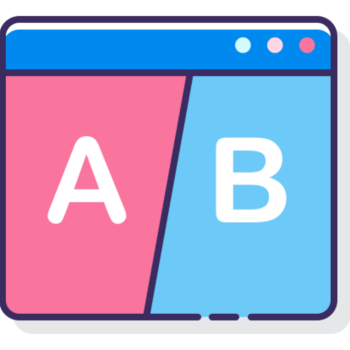
You create two alternative versions of your page, each with a different headline / color scheme / call to action etc.
You do a split test to see which one works better. When you find out what converts better, then you test something else.
The more elements you test, the higher you can boost your conversions.
Things to test: Headline, page layout and navigation, the offer itself, using different media (such as a video) and even a radical change if you think you might want to start over.
You can use Google Optimize if you’re looking for a free A/B tester, or Optimizely if you want more options.

Sometimes your conversions are taking a hit because you’re asking for the signup or the sale too soon in the process.
If people are still in ‘browsing’ mode, they might not be psychologically ready to subscribe or buy.
If you’re looking to improve conversions on a squeeze page that only asks for their email address, your focus should be on improving the reason why they would want to sign up. Making your offer more compelling – something that will immediately spark their desire – should do it.
But if you’re selling a product, it’s possible that you need to do more to build trust, develop a relationship and prove your expertise.
Remember, the longer and deeper the relationship with the prospect, the more likely they are to buy from you.

No matter what you’re selling or how much you’re selling it for, there will be objections.
If I tried to sell $100 bills for $1, there would be objections (and you know what they are.)
Make a list of all the possible concerns your prospects might have.
And then address each one of those in your presentation / webpage / sales funnel.

People won’t buy from you if they have no need for your product, if they have no money to buy your product, if they’re not in a hurry, and if they don’t trust you.
There’s not a lot you can do about the first 2 items on that list.
You can create urgency by limiting the number of products to be sold or the duration of your sale.
So what makes people trust your website?
Several things:

If I were to give you a value proposition that reads like this…
“Revenue-focused sales automation and marketing effectiveness solutions unleash collaboration throughout the revenue cycle,”
…would you have a clue what I was talking about?
Because I sure don’t. It’s not useful to the person reading it, unless your goal is chase them off of your page. Then I suspect it’s highly effective.
Just remember, clarity if key. If they don’t understand exactly what you’re saying, they’re not going to convert.

Your goal is to get people to focus solely on the action you want them to take and nothing else. Take a look at your page for anything that might divert the visitor away from what you want them to do. Minimize distraction, unnecessary product options, links and extraneous information.
And ask yourself if there is anything else you can remove that is not contributing to the conversion.
Increasing your conversion rate isn’t hard, but it does take effort…
Effort that will be well-rewarded in increased sales and revenues long after you’re done making the necessary changes.


If you are a marketer of any description you will know that traffic is the lifeblood of any business.
Simply put: No traffic, no business!
A lot of marketers get so caught up in tracking their traffic stats that they forget to make the most of that traffic. Tell you what, traffic is worthless if your visitors aren’t buying what you’re selling, joining your list, or taking some other important action.
So how do you make the most of your traffic and monetize it?
First off, make sure you are indeed bringing targeted traffic to your site. You don’t want just anybody visiting your website or hitting your sales/squeeze pages. Do this and you’ll wonder why you’re getting a lot of visitors but no sign-ups or sales!
So, whatever methods you are using to drive traffic to your website, make sure you have your targeting dialled in and you know your ideal customer is to make the most out of your website traffic.
And secondly, use this little “traffic checklist” to monetize that traffic…

The first thing you need to do is figure out the primary goal for EACH page of your website. Depending on the page, this primary goal (and monetization strategy) might involve getting your visitor to:
Here are two best practices when it comes to monetizing traffic:
Next…

Now you need to design each page of your website around your primary goal.
For example:
Next…

Despite your best efforts, people are going to hit the back button on your site and bail out without joining your list, without buying a product, and without clicking on any ads.
That doesn’t mean that they’re poor-quality visitors who’ll never buy anything from you. Instead, it could mean they just didn’t see the right offer, or they’re in a hurry, or you didn’t sufficiently persuade them to take action.
For example, redirect your exit traffic to a highly enticing lead magnet so that you can get people on your list before they leave your site. For best results, create multiple lead magnets so that you can offer the lead magnet that is directly related to the page the visitor was viewing before they tried to leave the site.
For instance, if your visitor was reading a blog article about how to set up a Facebook ad campaign, then offer them a lead magnet (such as a report) that gives in-depth instruction and “done for you” ad templates.
TIP: Don’t know how to redirect exit traffic to another page or create an exit pop? No problem. You can search for “exit traffic scripts” in your favorite search engine, or you can use a service such as Thrive Leads or Conversion Gorilla.
Many folks will say that they don’t like exit pops or redirects, especially marketers, but the simple fact is, they work but use them sparingly.
And finally…

One of the best ways to monetize your traffic is to test and track all parts of the process to find out what really works.
Specifically:
Let’s wrap things up…

So there you have it – a quick and effective checklist for making the most money with your traffic.
To recap:
As you can see, this “traffic checklist” is pretty simple, but very effective! So put this plan to work for you today to start making more money from all your traffic.
Any online marketer worth his/her salt would have heard the line, “The money is in the list.” It has been repeated ad nauseam and still thousands of beginner marketers are clueless as to how to build a list.
To make matters more burdensome, most autoresponder software companies charge a monthly fee for their services. So, this is a recurring cost that must be recouped quickly to keep the beginner marketer in the green.
When you’re first starting out on your blog, you’ll not need to build a list. You should first track the amount of traffic on your website. The moment you’re getting 50 to 100 unique visitors to your blog daily, it’ll be time to sign up for an autoresponder. This will buy you some time if your budget is tight.

A freemium is a gift that you’ll give away for free in exchange for an email address. The freemium could be a short report, or a 3-part video training or a checklist, etc. What you give away has to be of value and congruent to the niche you’re in.
You can either outsource the job or create one yourself from scratch. Alternatively, you may use private label rights (PLR) content and rebrand it. This will allow you to create a product with your branding quickly while maintaining quality.

Once your lead magnet is ready, you’ll need to create a landing page for it. You can do a quick Google search for ‘best landing page examples’ to get an idea to model. You may wish to get a cover image done for your freemium on Fiverr.com.
After your landing page is complete and looks great, you’ll want to sign up with an autoresponder like Active Campaign or Aweber, and embed the sign up form on your landing page. Most of these software have video tutorials to guide you. So, don’t get put off by the ‘tech stuff’.
Once the form is embedded, you’re well on your way to collecting leads and building a list.

In this case, Rome will be your landing page and this is something that you own.
To mitigate the risk, you’ll want links from these social media entities pointing to the landing page on your blog. In this way, you’ll be able to siphon traffic from these high traffic sites and build a list of subscribers who wanted your freemium. Now you have some degree of control and your own asset.

One of the best tools you can use to build a list on your blog is Thrive Leads. The software has options for you to create a non-intrusive scroll mat that allows readers to sign up. Besides the scroll mat, there are also sticky bars and pop up options for you.
Thrive Leads is designed to help you get as many subscribers as possible from your blog. It’s a worthwhile investment that will reap dividends many times over.

This is one of those techniques that’s annoying to some people, but highly effective nonetheless. You’ll need to use a content locking plugin to execute this method. If you have Thrive Leads, you can use it too, with a few tweaks.
Basically, you’ll have an interesting and highly valuable blog post where you share some insider information. Somewhere around the center of the post (preferably the most interesting part), you’ll insert the content blocker.
Some readers may get put off and close the page, while others will sign up. Whatever the case, you’ll know that those who signed up are truly interested in what you have to say and you’ll be building a list of highly targeted subscribers.
By now you’ll realize that building a list on your blog is a piece of cake if you have traffic coming in. All you need to do is insert forms for them to sign up to your list (in a variety of ways). With the versatility of Thrive Leads, a good landing page and a value-driven freemium, and a solid autoresponder, you’ll be able to build a list of targeted and interested subscribers in just a matter of time.
Drops make an ocean. So, get started today and in a few months from now, you’ll have an email list that trusts you and buys the products you recommend. This is where you’ll find the money in the list i.e. the saying should more accurately be “The money is in the customer list.”


Blogging has truly revolutionized the way one experiences the digital age. There is apparently no limit to what you can do with the help of blogs. Even the smallest aspect of your daily personal life like recording journal entries has been given an entirely new dimension.
Going on from there, there is a lot of scope for picking up interesting debates and discussions through blogs. You can even start some of these discussions yourself.
And it is easier to do than you might think. Honestly, it isn’t rocket science; you don’t need to be a scientist who posts revolutionary details about his latest experiments.
If you blog well, i.e. if you are engaging enough that people want to come and read it, you have a really good chance of making some money, by just going about your daily activity of posting blogs on areas that interest your readers in your niche!
Here are some of the things you can do to make sure that your blogging activities get rewarded by more than just comments and praises:
You could get yourself registered with a search engine. Doing this will virtually guarantee that your blog will get a great deal of free, organic traffic, and traffic is the lifeblood of any blog/business.
In this way, the higher the ranking your blog achieves, the more you are likely to get paid because more people will be able to find your content quickly.

Here are a few tips to help you with your blog content:
So, be consistent with your blog content and watch the traffic start flowing in to your blog!


The question “Do blogs still work?” is one which gets asked a lot and the answer is quite simple.
Of course, they do!!
Put it this way; providing good high-quality information is exactly how to earn the favor of the search engines, which have the potential to make or break your business.
Most businesses and entrepreneurs are all too aware that ranking on Google and other search engines can help their bottom line, and there’s no denying that this is a simple fact of doing online business.
And since it dominates 75% of the global market share it’s best to focus all your efforts to rank on Google above all else.
So, how do blogs play into this?
Well did you know that 47% of buyers view 3 to 5 pieces of content before engaging with a sales representative, and companies with blogs tend to get 67% more leads than those who don’t have an updated and optimized blog.
And being found easily in the search engines is obviously going to play a key part in people finding your blog posts.
You could have the most amazing content on the internet but if people can’t find it you are wasting your time.
SEO, or Search Engine optimization, is a very important strategy when building your blog, especially off page SEO strategies, and these are continually evolving along with any updates to the Google algorithm.
Sometimes businesses just aren’t clear on how content production can lead to lead generation.
The simple answer is, as stated earlier, people will need several exposures to you and your content before they feel comfortable parting with their contact details or their cash.
Building up trust and authority status is crucial to your success, and a blog is an extremely powerful tool at your disposal, to build credibility and showcase your expertise.
Your blog content should be your best stuff. Some will balk at giving away their best content for free, but that is what it takes to be successful in the modern online world.
So, are you still wondering “Do blogs still work?” Hopefully not, and here are some simple tips that you can use to optimize the way your blog will work for you.
These are easy to do, and you can get started right away; many are common sense, but you will be surprised that many blog owners are not doing them correctly, and that means you can get a competitive edge over them by following them.
OK, on with the tips…

Going back a few years ago, short sub-500 word articles were the best type of article to write to gain a high ranking on Google, but those days are long gone.
Longer posts are much more favoured today and when I mean long, these articles can be over 3000 words, which is like a small ebook!
The focus is on high-quality information going deep into a topic that can really help your readers with their problems.
Don’t think you can just waffle and stuff keywords into your articles as you will be penalized.
Write with your reader in mind and you can’t really go wrong.
So, long high-quality posts are what is really required today to rank highly on Google, targeting long tail, “buyer intent” keywords which are MUCH easier to rank for.
Having a content calendar/schedule is a great tactic to use to try to instill the habit of creating content regularly.
Some will say to write daily, some weekly, some monthly!!
The truth is, there is no right or wrong answer, but you must be consistent.
If you can only manage to write one article a month, that’s fine. Never sacrifice quality for quantity.
Once you have started writing your post you can move onto the next tip…

When you are writing anything on your blog, try to write conversationally; use you and I in your writing i.e. talk to your reader one-to-one.
This really helps to create a connection with your readers. Don’t try to be aloof as the subject “expert” but rather try to position yourself as a fellow traveler.
This is much more engaging for both you and your readers.
Also, try to use stories if at all possible as these are incredibly engaging and powerful.
Another engaging post is a case study, and this also shows the readers proof that what you are writing about works.
If you allow comments on your posts, respond to all your comments as soon as is practicable for you. Having a dialogue is incredibly engaging for the reader involved but is also another indirect form of social proof.
So, now you have readers looking at your content. Let’s move on to the next tip…

You should always write a blog post with the end goal in mind, whether it is for the reader to opt-in to your email list or to get them to click through to your offer.
Also use widgets to add opt-in forms or calls-to-action on your sidebar or use pop-ups and/or exit pops.
I can’t stress this enough; don’t just write a post for the sake of writing as it is a waste of time; after all, you are in business to make money and if you have people consuming your content, it is an ideal opportunity to get them to sign up or monetise them.
You may be uncomfortable using more intrusive forms such as the pop-up, but they do work, as long as any offer you are showing them is highly congruent to the post they are reading.
Working in tandem with the call-to-action is our next tip…

What is a content upgrade?
Well, basically it is another chance to further encourage your readers to sign up.
And, because the focus is on longer posts, a very quick and simple content upgrade to offer is a copy of the blog post in downloadable pdf format so they can read offline or at their convenience.
Other types of content upgrades that work well include checklists, video, audio etc.
Video/audio doesn’t necessarily mean just having a video or audio version of the blog post; it could also be some complementary training that enhances the information in the blog post.
Get creative and you can have many opportunities to capture your readers email address.
If you are going to offer a pdf of the post, then a really quick way to do this is to use either Post Gopher (a WordPress plugin) or, my personal favourite, Designrr. Both of these tools can produce a pdf version of the blog post, but Designrr allows you much more flexibility to customize the end result.
Using calls-to-action or content upgrades aren’t the only way to engage and entice your reader to sign up. Now you can have your very own personal assistant on your blog, leading on to our next tip…

Messenger chatbots are hot right now and have super high engagement and you can quickly use a service like ManyChat or MobileMonkey (you can use the free versions to begin with although the Pro versions aren’t that expensive).
When you have signed up you can use the service to install a small snippet of code on your website that will allow a custom chatbot to show on your blog; cool. eh?
Both Manychat and MobileMonkey work specifically with Facebook Messenger and have incredibly high engagement, and there aren’t that many blogs doing this at the moment, so it is definitely something worth looking into.
So, there are 5 ways to ensure that your blog is still relevant today and in the future.
Implement them and you will be able to answer anybody asking you “Do blogs still work?” with a resounding “Yes!”
As a bonus, here are 4 reasons why blogs don’t work.
When you look at blogs that are failing, there are normally some common reasons that keep popping up and these are summarized below.
Again, there is a lot of common sense here, but these things can be easily overlooked, so refer to this list often so you don’t fall into any of the traps that could be hampering your success.

This blog post is NOT about SEO, but you really need to be doing the basics to give your blog an SEO boost.
On-page SEO, such as having a keyword rich post, having your main keyword in your post title, using internal links (if appropriate), optimising tags in any images used, using Yoast SEO plugin (if using WordPress) etc.
Off-page SEO is more important for ranking, and involves building backlinks to your blog, using broken link strategies, reaching out to influencers and guest blogging etc.
If these things aren’t in place, the chances are that your blog won’t rank, which means that few, if any, people will see it and no additional lead opportunity will be created, which, of course, will result in zero new sales.

Serious question:
How can you know what topics are getting searched the most and are most relevant to your company if you’re not doing keyword research?
Writing blog posts with no target in mind is completely pointless.
You must do your research and find out what people are typing into Google to find the information that you are trying to give them.
Targeting these keywords will result in less competition, thus making it easier to rank for, BUT it must be a keyword that people are actually using!

Some entrepreneurs don’t realise that people are reading their blog posts long before they ever converted. As stated earlier, it takes at least 3-5 exposures to your content before a reader will trust you; in all honesty it’s probably more like 7 exposures.
Along with keyword research, you should’ve already done your niche research and know who your ideal reader (and thus customer) is, and ALL your content should be written with this person in mind.
You also need to be able to analyse and track visitors to your website so you can see which post are working and which aren’t.
Without this kind proper analysis, it’s unlikely to know which blog posts actually led people to fill out a form or were part of leading people to fill out a form, so all the blogs were marked as a waste of time.

Even if you have done all of the above and you do have a wonderful blog that is based on keyword research and properly optimized you still need to promote the blog to your audience.
In all honesty, writing and publishing a blog post is only half the battle.
Without thinking about the different avenues to connect users to your content, your blog is only going to reach a fraction of your audience.
You should also share every blog post on your social media channels; share to Facebook, Instagram and Twitter at a bare minimum.
OK, there you have it. You now have 5 ways to ensure that your blog is staying relevant, and 4 things to keep an eye on to ensure that you aren’t sabotaging your success and not ranking as well as you could.
All there is to do now is to start cranking out that content…
