Articles

Blog post WM2

How to Target Early Adopters with Your Next Big Idea

Not to sound bigoted, but let’s just face the facts:  some customers are more valuable than others.  There!  I said it!  More specifically, customers who can be classified as “early adopters,” especially in the realm of digital technology, are major players in the success or failure of a 21st century business and/or product.  Early adopters are so important because they’re often also your influences; they run blogs, Youtube channels, and everything they say has triple or quadruple-digit retweets on twitter.  Get on the good side of an early adopter, and they can bring with them hundreds or thousands of average users.  In some writings on the adoption curve and life cycle of new products in our day and age, early adopters are touted as those who can guide a new business across the “chasm.”  The chasm is the period of uncertainty where it is uncertain whether a product will make the jump from something a few
people try out to a technology that is adopted and integrated by the majority.

Today, we’re going to talk about how you can help your products and businesses be as attractive to early adopters as possible, and how you can best leverage that attention.

1) Find a genuine need.

Depending on where you’re at, this might be advice coming too late, but the first step to getting your product into
the hands of eager early adopters is to make sure you’re filling a genuine need.  People have “cool” ideas all the time, but that doesn’t mean they’re ideas that will come to be known as “needed.”  Sometimes, however, your big idea can simply be an improvement of another system (think:  Facebook usurping Myspace), however the barrier to entry with these ideas is higher because your product has to be so good it entices people to drop something they’ve grown accustom to.

2) Have a proper incentive system.

Don’t just offer to give people free products, give something above and beyond that.  For example, you might take a note from the gaming industry:  Often times, these companies will offer their early adopters exclusive titles for their profiles or unique character looks called “skins” that won’t be available ever again after the initial testing or adopting period.  Think about what rewards could be relevant to your audience in the same way.  Maybe you’re launching a
mobile ecommerce platform and you offer “veteran seller” badges or other marks of credibility to those who sign up and start using your site within the first 3 months, etc.

3) Communication will make or break you.

The world we market in today is one of two-way communication.  Social media.  You know, that kind of thing.  You should be regularly reaching out to and interacting with your potential early adopter audiences through the channels that they use most.  Beyond recruitment, this also expands to post-adoption feedback and support.  Early adopters will likely be using these channels to either get in touch with you directly or to broadcast their opinions about your product or service.  Either way, you should be monitoring social and traditional channels all the time to respond in a
timely, appropriate way.

Once you have all of the above in place you can turn on the traffic tap! And the best place to start sending floods of traffic is using is good old-fashioned media buying.

Continue Reading
10TipsToBeMoreProductivethumb

10 Tips To Be More Productive

Continue Reading
10TipsToShowMoreGratitude

10 Tips To Show More Gratitude

Continue Reading
10TipsForLifeAndBusinessSuccess

10 Tips For Life And Business Success

Continue Reading
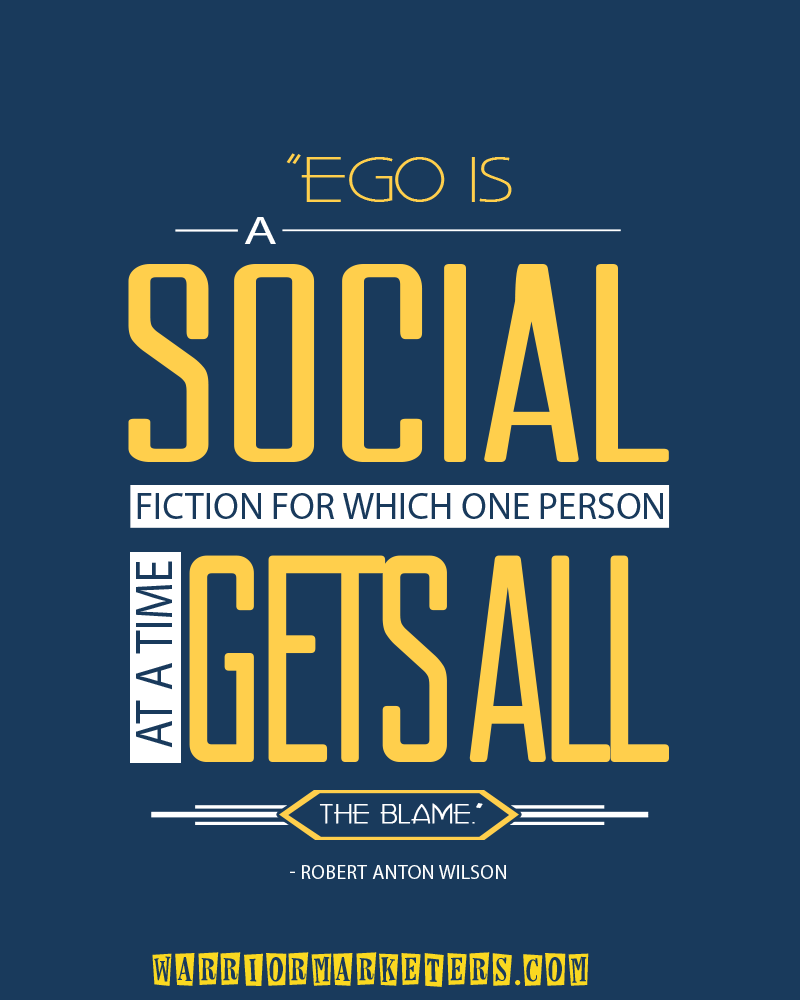
ManagingEgo_Design2_04a

Ego vs pride


If you believe that ego is basically an over inflated sense of self-worth, and that pride is a sin – then are they really the same thing, and if not, how do they actually differ from each other?
I’m sure that most people will ask this question of themselves at some time during their life.


Ego, in its most basic sense is a feeling of superiority to others and has a rather negative association. Or at least it invokes a feeling of separation from others.


Pride is a feeling of satisfaction we get when we achieve something that was difficult to do. Of course, you can also talk about the sense of pride we feel in what our friends, relatives or football team do, but in this instance we are talking about the feelings of pride we get due to our own achievements.


While pride can appear to be nothing more than an ego boost, it can also be a great motivator for you to perform better at sport, excel in academics, or be more demanding in the expectations that we have of ourselves.


Pride and shame are polar opposites, so you could argue that pride is a positive facet of ego and shame a negative one when the ego is discussed in the real terms of what it is: the development of our mental concept of self.


In many ways, ego and pride are 2 sides of the same coin and both have a basis in vanity. Pride will make you feel good about yourself when you feel that you have achieved something greater than others have. Then the ego may come into play to keep the id in check so that we always portray a socially acceptable face to society. You must have heard the saying “Pride comes before a fall”, and this suggests that the ego that is built up can also be deflated.


Because most people aren’t really interested in delving deep into psychological concepts and choose to accept common mistruths, there’s no easy way to determine what the actual difference is between ego and pride. Each will probably have a different meaning according to who you ask related to their own view of what’s “real”.


So, as you can see, both ego and pride have positive and negative aspects associated with them, so perhaps the only way to contrast them is to compare them. Is a sense of pride in one’s self the same as a sense of pride in one’s ego? The ego can quite happily survive on its own, and so, in that case, is neither good nor bad, whereas a sense of pride in that ego is seen as bad because it is an indication that one feels superior to others in one’s self-development.


As you can see, it’s not a simple matter to discuss, but the next time you feel superior to someone else, why not give your ego a break. And remember that it’s pride that may be pushing you to fall.


Continue Reading
Optimized by Optimole