Motivational

Maintain Focus

Master Time Management Techniques To Help Maintain Focus

Time Management

Time and stress are always closely tied together. Most of your stress will likely come from you being worried about not finishing your work on time, and that same stress will likely delay you even further, which ends up becoming a vicious cycle that leaves you stressed out and without much work done.

It can be frustrating for you, your co-workers, and your clients. To avoid all of this, you need to master some proper time management skills in order to give yourself enough time to get your projects done easily, and to avoid a scenario in which you’re overly stressed out.

When you’re stressed out because you don’t feel like you have enough time to complete a project, the logical thing to do would be to get to work. However, that rarely ends up being the case.

Chances are, if you’re stressed out about work, you’ll find ways to distract yourself so that you feel better in the mere short term, while in the long term you’re going to be making things much worse for yourself.

There are all kinds of excuses that you’ll see yourself come up with. You might claim that you’re distracting yourself to be more creative for a bit or to get yourself feeling better so that you can then work more efficiently.

Even if that’s true, chances are high that you’re going to be spending more time than you’re saving, leading to you having even less time to actually complete your project. With time management skills, you can avoid this situation altogether, because it’s difficult to get out of once you’re in it.

Plan

Time Management Tips

First, you can carefully plan out your project’s schedule and how long it’s going to take you to do it. Don’t cut corners at this stage – you need to be completely honest. If you claim that a part of your work will only take 30 minutes, because that’s the fastest you can do it, don’t count on that.

If there’s a chance it’ll take you two hours, budget for that to take you two hours. If you end up taking less time, that’s great. However, if you do take up that much time, you’ll have already accounted for it, so you won’t be playing catch-up.

You need to also cut out any time distractions to see how much of your time is being spent on things that aren’t work. You’d be surprised how quickly time can fly when you’re watching shows online or scrolling through social media. That time could be better spent getting ahead in your work or catching up if that’s what you need to do.

And it’s not just time distractions that you need to be aware of! There are so many things that will try to divide your attention and stop you from staying focused and being creative.

It takes a lot of discipline to try to ignore these distractions, but you do need to try to set boundaries. The question is “How?”

Set Strong Boundaries For Dealing With Interruptions

Time Management Techniques

No matter how hard you may try to avoid it, you’re going to be put in situations where you’re working and getting constantly interrupted. It can happen in many places, whether it be at work with other co-workers, somewhere with friends, or at home with your family.

It can be frustrating, or it can take you off track, so you need to learn how to deal with these interruptions properly so that you keep up with your work while also being civil with others.

For example, let’s say that you’re working at home writing up some documents on your laptop. Your kids might come in and start talking to you or make loud noises in the background again and again.

What you shouldn’t do is get mad at them, but rather you should tell them to be quiet during certain times of the day or interact with them every so often so that they’re less prone to interrupting you later on.

The situation with your family can depend on age as well. Toddlers won’t understand very easily that you need to focus on work, so try and patiently work with them to not come in so often, or try and play with them a bit more when you can so that they feel like they’re seeing you enough.

With older kids they can be a bit more understanding, so you should be able to explain it to them, and with teens they probably want to be in their own rooms anyway. When it comes to coworkers, you don’t want to seem like a complete stick in the mud, but you also have to be able to focus on the work you’re there to do.

Ask them nicely to talk later when you’re not working, and if that doesn’t work, get a little sterner. They of all people should hopefully understand that you need work, and if they’re still preventing you from doing your work, you might have to take the problem to someone above you instead of dealing with it personally.

Finally, you have friends that can be distracting. They might badger you into going out and hanging out with them, or prod you about working too much, but you should be able to tell them that you have to work, and you’ll just have to organize some time to hang out later.

It’s a difficult balancing act, but you should be able to still enjoy the time you have with your friends and family without sacrificing your work.

As you can appreciate, all of this can take a lot of self-discipline and a positive attitude. If you don’t have this, you will probably struggle to manage your time and distractions, so it is well worth your while to adopt the correct mindset; I know this may sound a little cliched but it does really work.

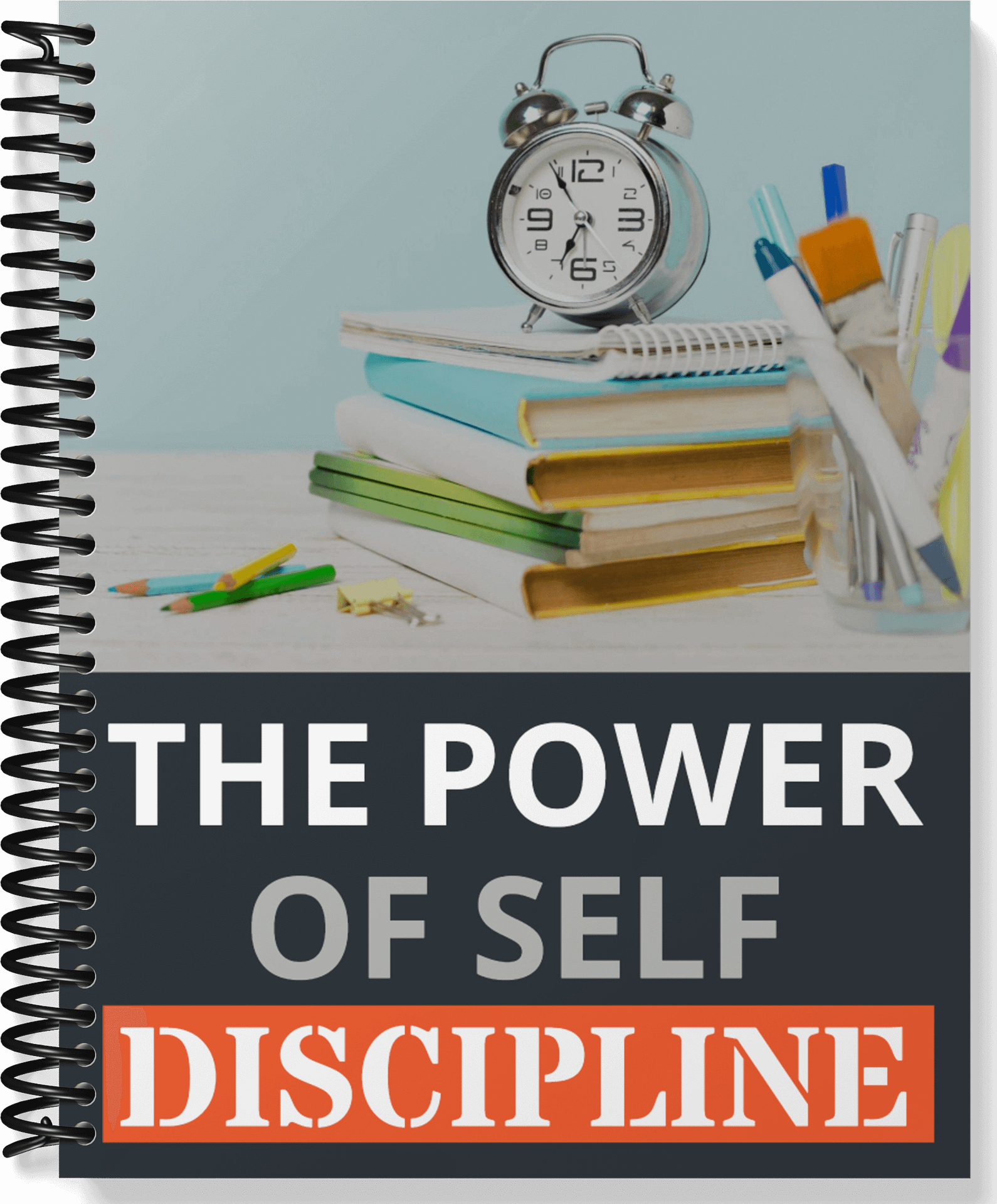
If you want to develop self-discipline, click on the featured resource below to get a free report, The Power Of Self-Discipline; download, read it and take action 😊

self-discipline
Continue Reading
energize

How To Energize Your Life

energize

Do you struggle to make it through the day? Do you constantly feel tired and worn out? If you do, you will know that it can be incredibly frustrating to have no energy.

The simple fact is that you must have energy to enjoy and profit from anything you do in life.

Some people seem to have an abundance of energy to do anything, while others struggle with every little task they face. There are ways to increase your personal energy and become a vibrant and successful person.

It’s been said that we’re living right now in the worst energy crisis of all time – the crisis of personal energy. We’re more stressed and pulled in more directions than we’ve ever been and the fast pace we’re expected to meet is depleting our energy levels at an alarming rate.

Managing your personal energy has never been more critical. Doctors say that the number one complaint of their patients is, “I have no energy.”

There can be a number of reasons that a persona may be suffering from lack of energy, but most of the time it has nothing whatsoever to do with a medical condition, but you should at least get checked out first to rule this out.

Chronic fatigue is often linked to circumstances such as a difficult or abusive relationship, lack of passion or being a caregiver to a parent or child.

Rather than deal with lack of energy by prescribing drugs, doctors are now more likely to suggest some tools that will help to restore energy levels and help the person enjoy their lives more and this is a good move; drugs are not the answer as they tend to just treat the symptoms and not the real underlying cause.

Here are some tools designed specially to increase your personal energy levels:

  • Do what you’re passionate about. Passion is one of the greatest energy restorers available. You may not be passionate about everything you do, but find something that makes you happy.
  • Take care of yourself. Give yourself breaks when needed. Most people today think they have to keep going long after their energy levels are depleted. Taking care of yourself will help to keep your energy levels high.
  • Know your emotions. Your thoughts drive your emotions and some emotions can wear us out. When you think positive thoughts, you’re naturally going to have positive emotions and that is a natural energy booster.
  • Let your values determine your lifestyle. If you don’t live according to your values and react and perform out of guilt and shame, your energy will wane rapidly.
  • Take responsibility for your life. You, and only you, can make the choices that determine whether you will be successful or always floundering just on the precipice of success. Make wise choices when it comes to your wellbeing.

To enjoy a happy and vibrant energy level and shift from lack of energy to an abundance of energy, you must tap into the powers that only you hold – to love yourself enough to take care of yourself.

Keeping energy levels high all the time may not always be feasible so how do you get your replenish energy levels quickly? Let’s look at that now…

How To Recover Your Energy Quickly

how to energize yourself

Restoring your energy after it feels depleted doesn’t require magic.

Sometimes, a hot cup of herbal tea will do the job. Other times, it may take some rest to bring your body from feeling like you have nothing left to the point where you feel vitality and inner strength again.

There are some strategies involved in giving your body what it needs to recover its strength and rebound to a point of well-being. They are:

  • It may sound counter-productive but moving can actually help you connect with your body. Movements such as stretching, yoga movements and poses and a walk can help restore your energy. Moving is especially helpful when you’ve spent hours at a desk or focusing on something intensive.
  • Your body should tell you when it needs rest. Rather than pushing yourself to go on until you fall down, get the rest you need. Your body will appreciate it and your energy will be restored.
  • When you’re still and go within yourself, you experience a new energy that you didn’t have before. Try to find quiet spaces and times during the day to just be still and meditate about peaceful and restful things.
  • Guard your time. Everyone has the same amount of time, but how we use it varies from person to person. Some give it away without thinking, while others always schedule time to take care of themselves. Watch how you spend your time and guard it carefully.
  • Take some time to feel your breath as you take one after the other. Inhale and exhale until your entire body feels the power and life that it’s providing your body and mind.
  • Make the world a better place. It may be as a parent, teacher, manager or friend, but take some time in your busy life to appreciate your experiences for what they are. They will all teach you something and help you grow.
  • Take care of your body. Through diet, exercise and other ways, nourish your body so that your choices can help your energy restore itself.
  • Take part in what inspires you. Your desires usually indicate what your passion is, and your passion can ignite your energy. The truth is in what you’re thinking of most of the time and what you are excited about.

Rather than do things and be around people who drain you, stay away from that and nourish the things and people who make you feel alive and more energetic.

If you’re exhausted from a day’s work, treat yourself kindly, get rest and feel compassion for yourself.

Another benefit of having good energy levels is that you will become more productive so let’s now take a look at managing your energy levels and increasing your productivity.

How To Effectively Manage Your Energy And Increase Productivity

energize your life

More and more, people are realizing the importance of managing your energy level rather than you time to increase productivity. There are many things and tasks that can zap your energy levels and make you much less productive than you could be.

You may also experience low energy levels during certain times of the day and should either take a break during those times or schedule non-important tasks.

If you find that certain people, tasks or times of the day are taking a toll on your energy, it’s time to assess what those problems are and do something about them. It’s about managing your energy effectively rather than your time.

Energy levels are different from person to person. If you’re a morning person who is at the top of their game at the first crack of dawn, you should schedule the more difficult, mind-boggling tasks at that time. Others, who are night owls, should plan their schedules the opposite.

Some other ways to effectively manage you energy to get more done include:

  • Delegate – Some people have difficulty with delegating tasks to others. If the kids can help fold towels or there’s a good writer in your business that could develop a sales page – delegate those tasks to them. You’ll be saving the energy you would have spent on something that can clearly be completed by someone else.
  • Track your tasks – There are some great online tools (such as Google Tasks) that can help you track where your time and energy is being spent. You can break the larger tasks into smaller increments; do the most difficult ones when your energy level is high and mundane tasks when your energy level is lowest.
  • Get rid of distractions – Distractions can be huge energy-drainers. If you’re on Facebook, Twitter, Pinterest, YouTube and other social media sites, you may find yourself wondering where the time has gone after you’ve spent an hour on one of these sites. Disconnect to save your energy and get more done. Stop alerts and hide the sites until you have some relaxing time to devote to them.
  • Refresher breaks – Some of us can spend hours at our work desks without looking up or moving around. At the end of one of these sessions, you’ll notice that your energy is drained and you don’t have much left for anyone or anything else. The remedy is to take refresher breaks – get up and stretch and move around for a few minutes. Your productivity will likely increase.

Getting in sync with your natural energy rhythms can help in so many areas of your life. Work, personal life and health are just a few of the ways that managing your energy can make you a happier and more productive person.

By the way, if you want a convenient, downloadable version of this post, click on the featured resource below; download, read it and take action 🙂

Continue Reading
lack of education effects

Is Lack Of Education Really An Obstacle?

lack of education

Do you worry about not being clever enough? If you are like most people, I’m sure that this fear has cropped up at least once in your life and it can be difficult to overcome or come to terms with.

If you don’t have a certain skill and are looking to get into a certain field, it becomes an immediate obstacle to getting your foot into that industry. It’s something that holds a lot of people back from realizing their dreams before they have even started and that is a real shame.

Today, there are more opportunities than ever, to get the needed training and you don’t necessarily need to go to college to get it.

By some measures, ten thousand baby boomers are retiring each day. What this means for those still in the workforce is companies are left with a gap in resources.

These resources need to be filled. In the past, if you didn’t have the skills to fill that gap, you were stuck, because there were plenty of people that could step up with the right skills.

But, with the mass exodus of one large group of people, companies are less stringent about strict college requirements. If they aren’t now, they soon will be.

It’s a matter of common sense and economics. If you have a shortage of skills, you are going to be more lenient in who you find. This means that you can train yourself and approach companies to present your new skills. You won’t need a degree, nor will you need much experience.

And in some countries, the barrier to acquiring a degree has been pushed so low that it means it isn’t worth anywhere near as much as it once was which is a real shame.

You need to be aware that if you don’t have that degree you may have to start out at a lower salary while they are training you.

But, when you get the needed training and some experience under your belt, you will be in a better position to negotiate. Experience beats qualifications any day and that is become even more so in the modern work place.

It is possible the company training you will require you to stay for a predetermined amount of time. You will need to decide if this is acceptable to you. Remember, it’s about getting your foot in the door.

As far as where to find the training, believe it or not, you can start with YouTube. They have many training videos that can give you some beginning advice and instruction. When you go through some training, then you can step up your efforts and look for more advanced instruction.

At this point, it’s a good idea to get on some mailing lists related to the field you are trying to break into. Involve yourself in forums as this is a good way to get familiar with the influential people in your field.

Consider starting a blog related to this new field so you can add credibility to your efforts. Maintaining a blog shows you are serious about committing to the field.

And don’t be put off by anyone or anything; there are plenty of people out there who have become great successes despite poor education or some other type of obstacle.

They often look like they have it all and it was handed to them, but more often than not, that is far from the truth.

Here are a few to inspire you…

Examples Of People Who Overcame Obstacles

lack of education in the world

The following people are well-known and have overcome obstacles at some point in their lives. This article profiles what types of obstacles they faced and how they became who they are because of them.

If there is any story that can help people overcome obstacles, it’s that of Helen Keller. Here is a woman who went deaf and blind before she turned two from a sickness. Others may have sheltered themselves from the world.

With the help of Anne Sullivan, who became her governess and companion, Helen rose above her obstacles and learned how to help others in similar situations like hers.

Helen became a renowned author and speaker, which was incredible during her time. People with her type of disabilities were not expected to do much. She became an activist for women’s suffrage among other causes.

To say that Abraham Lincoln had a lot on his plate is probably the largest understatement in history. He lost his mother when he was still a child and his family lived in poverty.

He taught himself law and went on to become one of the greatest presidents in the history of the United States.

But, he dealt with severe depression. Some believe this is what defined him and it led him to greatness. He focused on what he could control and understood what was beyond his control.

The war was a difficult time for him, but he persevered. Even his enemies admired the man for what he accomplished.

The author of the Harry Potter series, J.K. Rowling, struggled before becoming well known. She was divorced and living in poverty with her daughter in Scotland.

This low point in her life was both depressing and revealing. She used the pain at the time to transform a concept she carried with her, i.e., the concept of Harry Potter, into an epic series. You are unlikely to find too many people who are not familiar with this story.

Her example is one of not giving up and writing during her low point. Where others would simply feel sorry for themselves and continue to live in poverty, Rowling wanted a better life for her and her daughter. So, she persevered and catapulted to success.

As you can see from the profiles in this article, these people overcame their obstacles and went on to greatness. It is within us all to do the same, as long as we are willing to do what it takes to get there.

And having a strong mindset is critical to any attempt to staying focused and motivated to achieve greatness and overcome life’s obstacles, so click on the featured resource below to get a free report on how to develop a strong mindset. Download, it read and take action 🙂

goal setting theory
Continue Reading
how to find your life's purpose

Can Everyone Find Their Passion And Purpose?

find your purpose

Do you find that some days you wish you lived a different life? Perhaps you find yourself wishing that you were Richard Branson, Donald Trump or Brad Pitt.

It isn’t unusual to wish you lived a different life or were someone else. If you find that you have days where you feel unsatisfied or discontented, then it may be time to think about what you can do turn your life around.

What’s different about your life and that of those you admire and who inspire you? At first glance it may be that you think it’s money or fame. Often you will look at possessions.

Instead look deeper and list those qualities that you admire. It may be that you are inspired by their skills, knowledge, generosity or temperament.

What do they have that you don’t? They have passion and a purpose. They have something that they care about and are filled with a desire to make a difference; not just for themselves but for others.

Your life can be fulfilling. Living a life with passion and purpose is possible for everyone. You do not need to be rich, famous or highly educated.

To find your passion and purpose you need to discover what you really want. Don’t just consider material objects, look deeper at lifestyle, relationships, your health and emotions.

For a positive difference to take place you don’t need to give up your job and follow your calling 100% of the time. You can start small and paint your masterpiece or write your novel in your spare time.

This will allow you to begin to feel the benefits of doing what you love and feeling the positive effects and changes while still working and earning an income.

Not everyone wants to change the world. It may be that you want to make a difference by volunteering at the local homeless shelter. Your desire to bring about positive change in the lives of others, less well off than yourself, will bring about an enormous change in your life.

You will experience the joy of giving and in return feel a sense of satisfaction. In addition, you’ll probably pick up new skills, make new friends and connections and discover other changes you want to make in your own life.

Everyone deserves to live their best life. All you need to do is find what you really want to do that can make you feel excited, joyful, engaged and fulfilled. That way you can begin to live your best life instead of settling for a humdrum existence.

Four Secrets To Achieving Success

how to find your life's purpose

Everyone wants to be successful. Focus generally tends to be towards career success.

However, personal or life success, is also important. Success is about achieving goals.

After all if you haven’t got a goal then how can you be successful? So what are the four secrets that can help you be successful?

Set Goals
find your purpose in life

It is vital that you set yourself goals for your personal and professional lives. These will provide a target to aim for.

Once you’ve listed your goals then write down the steps you are going to take to achieve them. Add who or what can help you to your list.

Find an accountability partner, mentor or coach who can help and support you.

And when you are setting goals, don’t always be totally focused on the end point but try to enjoy the journey along the way. Life is about enjoyment, not just achieving something.

If you want to discover how you can embrace your passion and enjoy the journey, then check out this excellent training here.

Remember That Your Personal and Professional Lives Are Inter-dependent

find your passion

You may think that your career goals are totally separate from your personal goals.

However, they are inter-dependent. Your career relies on your well-being, impacts on your family and relationships, your health and happiness.

Your happiness, relationships and health are affected by your career.

If you’re not happy at work or doing a job you love then it will have an impact on your emotional and physical well-being, as well as affecting other areas of your personal life.

To be successful in one area you need to create success in the other.

Find Your Passion And Purpose

how to find your passion

If your personal and professional lives are inter-dependent, then to be successful in them you will need to discover your passion and purpose.

By discovering these you will create determination to succeed, enhance your creativity, spark inspiration and be able to harness the power of flow in your activities.

 Ask yourself what you really want to do with your life. What do you want your legacy to be?

Don’t Focus On The Money

find your purpose

While many people consider amassing wealth to be a sign of success, that should not be your end goal or sole success indicator.

 Instead focus on your emotions, lifestyle and well-being. What will your life look and feel like when you have successfully achieved your goals? How will your family and friends feel? Why not create a vision board with words, quotes and pictures showing your life as a success?

When thinking about your professional success consider how you will know you’ve succeeded. What will your position be? How will you be making an impact in your company and in the wider community? What will your working day look like?

Think about work/life balance and the effect on your family and relationships with friends. How will your new role or business affect your life, health and happiness?

 While success can mean different things to different people, one thing all definitions have in common is that success is measured by achieving goals that make you feel positive emotions, for example, happiness and achievement.

You will find the greatest success comes when you use your passions to create your goals in life and work.

As you probably already know, having a strong mindset is critical to any attempt to finding your purpose and passion and staying focused on them, so click on the featured resource below to get a free report on how to develop a strong mindset. Download, it read and take action 😊


Time Blocking
Continue Reading
Stay Motivated

Using Time Blocking To Stay Motivated

Time Blocking

We are all guilty of suffering from a lack of motivation in our lives!

Am I right? Of course I am. This is just human nature and with all the distractions of modern living, it can be harder than ever to remain motivated and focused.

What happens when we push our brain to keep thinking, focusing and creating hour after hour? It shuts down. It goes on strike. It says “I’m outa here, buddy”.

This is especially true when we keep requiring it to focus on the same task for hours at a time.

Neuroscience now tells us that changing tasks regularly, taking consistent breaks and blocking out our time keeps our brain more engaged when it is working so that we actually get more done in less time.

So, let’s look at blocking time.

This is not a new concept. But it’s one we don’t use often enough to maintain our enthusiasm and focus, not to mention our mental and emotional health.

Blocking time is a way to schedule your work hours in a way that sets up a dedicated time to a particular task. And then, when that time is up, you switch to a new task.

But why you may ask, is this important to performance and productivity?

  • Keeps your brain from getting bored (aka, low motivation)
  • Mentally prepares you for the tasks ahead
  • Lowers stress because you see work getting done
  • Ensures no multitasking occurs
  • Improves self-confidence in your ability to succeed

So, how should you go about blocking your time? Usually, it’s recommended to work in 2–3-hour work chunks at a time, while allowing a short 5–10-minute break every 30-45 minutes.

  1. Decide how you will block your time. There are many ways to do this, including various apps and email calendars. Google Calendar is a great way to get started because it’s easy to use and readily available.
  2. Chose the date and time for your task. Remember to keep it to 2-3 hrs if possible
  3. Decide where you will complete the task.
  4. Include any details you need to remember before performing the task in the memo area. This will make it faster to get started when you get to that time block. No searching for the sticky note you wrote the directions on.
  5. Set reminders so you know when it’s time to switch tasks. You can get a reminder via email, pop-up or app notifications.

If 2-3 hours seems a long time to focus on a particular task, then you can use smaller chunks.

The Pomodoro technique uses time chunks of only 25 minutes, each followed by a 5-minute break. After 4 of these chunks, you should take a 15-minute break.

If you a little more information about the Pomodoro technique, you can read this blog post

Using time blocks keeps your motivation high for all the reasons stated above, and also because it allows you to use several of your skill sets each day. It breaks up the monotony of doing the same task all day long.

When working on tasks, you should also schedule breaks you’re your routine.

Why, you ask? Well, let’s look at a scientific reason now…

3 Reasons Science Tells Us To Take Breaks

Stay Motivated

Too busy to take a break? That’s a common thought in our fast-paced world.

We are a society with consistently too many things on our collective plate.

But science tells us that we need to make taking regular breaks a priority to maintain inspiration and productivity.

Advances in neuroscience have proven that we need breaks as well as focused work time, as some cultures have known and practiced for millennia.

Why We Need To Take Breaks

Productivity

There are a number of reasons why it is important to take scheduled breaks, and we will cover just 3 of them in this article.

It makes perfect sense to stop every now and again as if we don’t, we will get tired and lose focus.

This causes us to become frustrated and becomes a negative feedback loop, so it is important to take a break.

Let’s look at 3 big reasons to stop…

Make Connections And Retain Information

Motivation

Our brain has two modes of operation. The focus mode, which is where we spend most of our day, concentrating on tasks and challenges as they arise.

The other mode is just as important, though often underappreciated – the diffuse mode. This is the state of daydreaming or letting our mind wander. You may have experienced the benefits of this mode when you are doing something mundane on autopilot.

For example, you may have an ah-ha moment about a solution to a problem that you’ve been trying to solve while you are driving someplace familiar or taking a shower. This diffuse mode is when most of our insights and out-of-the-box thinking happens.

Re-Evaluate Our Goals

Mindset

When we stay focused on a task or problem constantly, we can easily become caught up in all the little details instead of questioning if we are completing the right tasks in the best order and way.

The devil may be in the details, but we need breaks to gain perspective on how our work is advancing and if there are more productive or effective ways to reach the same or even better results.

Stepping out of work mode for even just a few minutes is enough time to help us re-evaluate our goals and the way we are going about achieving them.

Keep Us Engaged And Motivated

Time Blocking

Our brains weren’t meant to stay in focused mode all the time, even though we think they should sometimes.

Neuroscientists have found that taking short breaks on a regular basis is a more effective way to work, even though that might seem counterintuitive.

Breaks give our brains a rest from constant focus so that they can “regroup” if you will. When we take breaks throughout the day when working on tasks that take a lot of concentration or take a longer period of time to complete, we actually are more productive and motivated when we are working on the task than if we worked straight through.

As you probably already know, having a strong mindset is critical to any attempt to plan and stay focused, so click on the featured resource below to get a free report on how to develop a strong mindset. Download, it read and take action 😊

Time Blocking
Continue Reading
Optimized by Optimole