
Get Your Free Quick Kindle Cash Report...
Just enter your details in the form below and we'll send you the free bonus resource that goes with this article.
Just enter your name and email below to get instant access!

Let’s say you want to write a Kindle book.
And further, let’s say you want to make sure it gets 5 star reviews and makes you a very nice, juicy, residual income.
Here’s how you might do exactly that:
First, choose a BIG niche that sells really well.
Selling a lot of books means you need a big money-making niche – something like:
You can’t go wrong with any one of these niches.
Now then, narrow your niche down to a specific topic. For example, you might narrow down “Diet and weight loss” to “How to lose belly fat after 40.”
Go to Amazon and search for all the belly fat and fat loss books, especially the ones tailored for people over 40.
You’re interested in anything in this sub-niche that is selling under the Kindle Bestseller rank of 20,000.
Why? Because of they’re under 20,000, then they’re likely selling about 10-15 books per day or more.
What – that doesn’t sound like a lot? Okay, let’s do some quick math:
If a book has a profit of $3 per sale, and is selling 15 copies per day, then that’s $45 per day.
Okay, I know that’s not going to make you rich, but think about this: At $45 per day, times 30 days, is $1,350 per month… Residual…
…As in, you publish the book once and get paid over and over again.
Increase the price or increase the sales and your profits go up.
Multiply 12 times $1,350 and see what that is per month.
Now do I have your interest?
Okay, back to your research…
You’re going to find these books in your subniche that are ranking under 20,000 and you’re going to read the reviews – especially the five star and one star reviews.
Make a list of everything people love about each book, and everything they hate.
For example, the list of things people love might be:
And things people didn’t like might be:
Write down all of that.
Now then, you’re going to keep what the customers liked, and improve what they didn’t like.
NO PLAGIARIZING, by the way.
That’s right – you don’t even need to write it yourself. Just give your instructions on what to include and how to write it to an outsourcer and let them handle it for you.
Your book will contain everything people love about the other books, and everything improved about what they didn’t like about the other books.
Do this and there is no reason for people to give you negative reviews, which is important.
As you know, Amazon reviews are HUGELY important.
Your book will eventually get more sales than the books it is modeled on as you get more and more positive reviews.
Meaning your income should surpass that of your competitor’s books.
Now then, rinse and repeat for your next book, and the next, and…
WAIT! Two more things…

First: Your book cover must be so mesmerizing that it STOPS Amazon customers in their tracks.
Everyone is busy. They’re skimming. They’re in a hurry. And there are hundreds of books in your category.
You can have the greatest book ever written, but if the cover stinks then you will get few sales.
Here’s what to do: Find a great Kindle cover designer on Fiverr. You might need to pay more than $5 – it’s worth it.
Ask them to make your title(s) BIG and BOLD.
Remember, on Kindle a lot of people are looking at titles on their smart phones. If the titles are small, they can’t read them.
Ask for high resolution graphics, because people associate higher resolution with higher quality.
Second Thing:

Now, when I say reviews, I mean REAL reviews.
Amazon has gotten smart about these things and they are cracking down.
Instead, ask your friends, family, acquaintances and so forth for real, legitimate reviews.
Also, place an email opt-in page with a nice freebie at the beginning and end of your book. This will build you an email list of readers.
ASK your readers (politely) for reviews.

Good question. Here’s how to do a killer promotion that gets your book ranking high on Kindle:
The only thing left for you to do is shoot your rankings up on Amazon.
Here’s what you do…

Promote your book on as many promotion sites as you can find. There are all kinds of Facebook groups dedicated to free Kindle books.
Set your book on a free promotion through KDP Select.
Also, if you have a series of books (HINT HINT) then link all of your books together. As soon as one KDP Select promotion is over, set the second book on promotion and so forth. This will cross-promote your books and your sales should see a compound effect.
Continue the above, along with building your lists (remember you’re placing an offer to get on your list inside your books.) Whenever you publish a new book, let your list know. Let them download it for free during the KDP Select promotion, and ask them to leave reviews.
Rinse and repeat and repeat and repeat…
Yes, this is a six, or maybe seven figure business if you stick with it.
And you thought we were just going to talk about writing a single Kindle book…
…okay, if you only want to do ONE book for now, make it a great one and tie it in with something else you’re doing.
For example, if you’re a coach or consultant or provide services, let your book be your ambassador and show the world that YOU are the expert.
It makes for a much better and more effective business card than a little slip of paper with your name and phone number on it.
The sky’s the limit, so have fun and become a best-selling author THIS month before you put it off any longer.

Do me a favor, will you? Go to Google and look up a few niche blogs. Start by typing in the niche word and then the word blog such as “insomnia blog” or “dog training blog.”
As you go through the page 1 SERP (search engine results page) links, notice the difference between opt in forms that simply say, “sign up for updates” or “sign up for the free newsletter” and those that address the visitor’s urgent problems.
Here’s a stark contrast you can see as an example. On one website the opt in form looks like this:

But land on a different insomnia site and the results are much different:

Wow! On this one you’re promised the newsletter, but also a FREE Sleep Starter Kit you can use TONIGHT.
There’s a big difference in who is addressing the visitor’s urgent issue of being sleep deprived.
Another site, located at http://www.insomnialand.com/blog, promises a free sleep training kit and says you’ll be sleeping better within 2 weeks.
So what can you offer that sets you apart from other marketers in the same niche?

One of the worst offenses to your visitors is to offer them something they don’t even need. When you think of need, dig down deep. Dig where it hurts – where they feel desperation.
Instead of “How to Have Pretty Skin,” touch on the concept of shame and beauty with a report called, “7 Ways to Clear Up Acne Overnight.”
Be specific about the problem.
Add a sense of urgency to the mix.
It’s not enough to offer a report on how to make your first $100 online, but offer it on how to make that first $100 today.
You can go to Google and type in the niche and the word forum and visit a myriad of forums to see what people need. So here’s a great example: http://www.psychforums.com/insomnia – when you go there, you don’t even need to go into the threads to get some great opt in report ideas for insomnia, such as:
Another place you can visit for ideas on what consumers need is the comment section of other blogs. Whenever you see a blog with a thriving community, people will often comment and discuss their needs – especially if the post doesn’t answer all of their questions.
For instance, if you see a comment that talks about the difference between insomniacs and perpetual thinkers, that could spark the idea for you to create a report called “Do You Really Have Insomnia?” where you differentiate between someone having sleep problems and someone whose mind won’t shut off.
Using this tool, if I type in “insomnia” first, one of the top 10 listings is “insomnia cures.” Click on it and go one step further, and you see report ideas such as:

For many marketers, their big mistake isn’t in coming up with an idea. They mess up when they fail to provide value. You see, this is your very first impression with a potential new subscriber.
You want to give away a whole course. Something where they download it or access it and can’t believe you just gave that away. This will do more than just appease a new audience – it will have them sharing it with others.
When you finish creating your opt in offer, put a price on it. In fact, you might even create a page somewhere online where you’re selling it for that price. That way you can show more value by saying, “My FREE Gift to You: Download My Insomnia Kit Now (Regularly $27)!”
But don’t skimp on the information. Your subscribers will know if you’re trying to dupe them.
It will also help you increase conversions whenever you do put a product out in the marketplace. Your readers will be thinking, “Wow, if s/he gives this much value away for FREE, I can’t begin to imagine what great information s/he’s charging for!”

You want to be the best you can be at all times with your business. But you also want to make sure you’re better than the other guy. Always one step ahead of him and outperforming his offer.
So that means competition spying time! Go through the same steps you did when you were first checking out the offers for your niche on page one of this report. Make notes about what offers are already out there.
Look at every detail of their opt in freebie. How big is it? Is it broad, generic information or detailed and specific? Do they have poor spelling and grammar? Do they have blatantly wrong information?
Make notes of everything you like and dislike and keep those handy whenever it’s time to create your own offer. So for example, if one insomnia expert said in his report, “have good sleep hygiene,” but he didn’t expand on what that meant, you make sure you do in your report.
So take your niche and go to Google and type it in. Then click on the News tab. So here’s an article I just pulled from the recent news about insomnia:
https://www.healthline.com/health/how-to-go-back-to-sleep
You can add that to your report. This up-to-date research might give someone a huge relief from their worry – or it might alert them to urgent information they need to know now.

Many marketers have nothing to offer. Just updates. That’s the worst type of opt in offer to have. Anyone can go to your blog through their bookmarks, or choose to use an RSS feed to check in.
Here are some of the formats you can choose to offer for your new subscribers:
Email Series
These can be done in a variety of ways. Usually it’s a timing slant. So for instance, you could offer:
Short Report
Like this report, you can create a short PDF file for your subscribers to download and devour. Extra points if you encourage them to share it virally with their friends!
Membership Access
Give someone access to something exclusive – a membership site. You can have a free level where users get in and get to see inside, and then they can level up to a gold or silver membership.
Audio File
Not everyone likes text. Some people like to learn on the go. You can create a podcast that subscribers love. It can be you talking or you interviewing someone – or even you being interviewed by someone else!
Video File
A video course is a great opt in freebie. Not everyone has fast Internet, so if you go this route, give them the download files to watch on their desktop so they don’t have to worry about streaming speed.

Make sure that whatever option you choose when creating an unbeatable opt in offer, you test and tweak throughout the year. Set up a split test so that you have different offers.
See what people like best. Test different formats for the same information. Test different offers completely. Test different ways of saying what it is you’re offering them as a freebie.
OK, there are 5 thing that you can do to create an unbeatable opt-in offer. If you want to know more about building your list after they have opted in, check out the featured resource below where you can get a free report about simple list building.
Do you know what an ego booster testimonial is?
It goes something like this: “Joe Smith is the greatest, nicest, smartest, sweetest, sexiest, gutsiest, tallest, handsomest guy I know – buy his stuff!”
It sounds good to Joe Smith. Heck, it sounds AMAZING to Joe Smith.
But does it sell his stuff? Generally, no.
So how do you write a great testimonial, and more importantly, how can you use them to boost sales in your business?
Here are 10 tips to do just that:

If they’re the only ones you have right now, then they’ll have to do for now.
Most people won’t like testimonials like these and will probably not believe them anyway and if you use them too much it could even put people off.
So, you really need to work on getting better testimonials that actually convert.

Results based testimonials are really powerful. Here is an example of one:
“After using the xyz product, my conversions increased by 4% and my overall sales increased by $32,958 in three months.”
Which is exactly what you want, by the way.

A photo of a face – regardless of how pretty or not pretty it might be, can increase the likelihood of your testimonial being read by as much as 80%.
Plus, it adds credibility that your testimonial is real.
Don’t underestimate the power of seeing the person behind the testimonial; we are social creatures and seeing faces will definitely make readers more likely to believe them.

If you’ve got a testimonial that uses numbers, then feature those numbers as a big, bold headline. For example:
32,955 3X $26,598
Additional Visitors Conversions More Income
“After implementing just one traffic technique that Josh taught me, I got 32,955 more visitors in one month, three times as many conversions, and made an extra $26,598 for the month.”

Video testimonials are great, but… not everyone watches them. And of those who do watch, not everyone watches the whole thing.
For example, “I didn’t have a clue how to get started, but thanks to XYZ program I can now get almost any page to rank in Google.”
Then at the bottom of the video, you might give more information, such as, “George was struggling to rank his pages, but then he took the XYZ course and followed the simple steps. See how he did it here ->”
That last bit can be a link to a sales page or blog post, unless of course this testimonial is already on a sales page.

If your testimonials aren’t on a sales page, then link at the bottom of the testimonial to a page that gives samples, and write something like this:
“Click to see a sample of what Joe is talking about ->”
You see, you can use testimonials anywhere; why not place one in the footer of your emails or website?

If your book – or any of your products – are on Amazon, then use your 5 star ratings and reviews on your sales pages as well.
For example, you might have a Kindle book on how to get traffic, and you sell an entire course on traffic, too.
Be sure to emphasize that while the book has great info and awesome reviews, your course has ten times as much info as the book.

If your customers have sent you pictures of them using your product, then by all means place these photos on your sales page.
Some people record unboxing videos and put them on YouTube so others can see what they are getting.
You may think this is mainly suited to physical products, but this can also be done with digital products where viewers are shown around the members area etc.

Comparison reviews can work great if you’re in a competitive market, especially if you create a chart comparing the features and ratings of your product versus others.
Also, don’t be too negative when talking about competitors products as this can cause you problems if they find out about it, so just stick to the facts if you do decide to use this.

Your customers might have great things to say about you on social media or through text messages. Simply take screenshots of these compliments and post them as testimonials.
To take a screenshot on Windows, press the PrtScn button. Or to capture just the active or foremost window, press Alt+PrtScn.
On a Mac, press Shift-Command-4.

It’s simple really. All you have to do is ask! That’s it!
Send out a survey to each of your product buyers to see what they thought. When you get back positive responses, ask if you can use them as testimonials.
For the really enthusiastic customers, ask if they will do a recording for you.
Think outside the box and you will see that there are many ways to use testimonials to boost sales and to increase authority status so start gathering them now.

If you are just starting online, then one of the quickest ways to start making money is to get into affiliate marketing.
This business model doesn’t rely on you having your own products to sell, but rather you are promoting other people’s products and you get a commission for each sale made.
This way you can quickly send traffic to an affiliate offer and start making money.
Of course, the first thing you need to do is to decide on the niche that you are wanting to operate in.

When it comes to affiliate marketing, there are many ways for affiliate marketers to choose a niche. It’s important that you put some thought and research into your niche before you put your time and effort into it.
The first thing you should consider is choosing a niche that you feel passionate about.
With affiliate marketing it’s best to be writing and working in an area daily. If you don’t enjoy what you’re doing, chances are slim that you’ll stick to it for very long.
Eventually you may even feel depressed and hate what you’re doing. This is the exact opposite of what you want to experience in your work life. Make sure you have the ability to dig in to your niche forever.
Next, you need to look at the longevity of the niche. You’ll want to avoid something that’s considered a fad and will be obsolete before you start making any money.
With affiliate marketing, it will take some time to begin making substantial income, even though initial commissions can be seen right away.
Once you’ve built up a niche, you want to be able to keep it going for a long period of time. So, make sure your choice isn’t something that will be here today and gone tomorrow. You want your hard work to pay off long-term.
Do your homework and find out how many people will be interested in what you’re promoting.
You also need to consider promotion options. In your niche, what kinds of products can you promote? Can you promote a book that will sell in your niche? Can you promote tangible items or digital products?
A membership site related to your niche is also a possibility to consider. These are all things to think about as you’re choosing your niche before you put in a lot of time and energy.
When you choose a niche that interests you and has a wide variety of products that you can promote, you’ll have more success in the long run.
Now, once you’ve considered all the above and decided on a niche, there is another consideration to think about: do you decide to stay in a broad niche with a larger target audience or do you drill down into a sub-niche which will be narrower and have a smaller audience but thy will be much more targeted. There are pros and cons for both so let’s dive in…

Whenever affiliates are just starting out, or questioning the direction they already took, they start wondering if a broad or narrow niche is the best way to go.
There’s actually no right or wrong answer, but you have to know how to tackle the two different strategies.
So, let’s say you decided to tackle the children’s toy niche. You could have a general toy site, but you’d still need to organize the content into things like toys based on age, gender, materials, brands, indoor versus outdoor, etc.
Or you could go with a narrow approach in your niche. This makes it really easy for you to rank quicker with an authority site.
For example, TopToysfor1YearOldGirls.com that was fully focused on toys for this age and gender would probably become an authority site rapidly for those searching for that topic.
Either way you choose – broad or narrow – you can work your way back over time. So, if you choose a broad niche, you can work over time to dig into the narrow levels and provide expertise there for your affiliate income.
If you choose a narrow niche, like the one listed above, you could branch out and create a bunch of narrow sites and then eventually link them to a main site.
For example, you could create a TopToysFor2YearOldGirls.com, 7-year olds, 13-year olds, etc. Once complete, you could then create a main “TopToysForGirls.com” site that linked them all together.
The great thing about both niches is that you can search for keywords that will help guide you in the type of content that you want to create.
Over time, you may want to move from free keyword tools to the paid versions that give you more information about the kind of edge you can expect to have over the competition if you rank well for them.
Pick whichever strategy you feel more comfortable with right now – broad or narrow – and then if you want to move into a new direction, you can do that without any problems down the road.


1000 prospects come to your site or sales page. 1% of them buy a $50 product. You’ve made $500.
You invest 2 days trying a few different ways to increase your conversions, and 3 are successful. You only increased your conversions by 1%, yet you’ve doubled your income, selling 2% of the prospects who come to your sales page.
Now for every 1000 prospects, you make $1,000.
And you send 1000 prospects a day, meaning…
Yet so many marketers never bother to do any of the things I’m about to suggest.
Why? I suppose it’s one of those things they’ll “get around to” but they never do.
So here’s what I recommend: If you don’t want to do any of the following, then OUTSOURCE it. We wrote an entire article on the importance of outsourcing elsewhere in this edition, so I won’t harp on it here.
Let’s get started on boosting your conversions:

Your value proposition can be the number 1 element that determines if people will bother to read more on your page.
And it’s also the main thing you need to test.
In a nutshell, your value proposition clearly states:
Here’s an example from Prey: https://www.preyproject.com/
Rest Safe – We’ve Got Your Back
Prey lets you track and find your phone, laptop or tablet.
Protect what you care for and it’s free.
I could do an entire article on creating a compelling value proposition – and I’ll do exactly that in a future post for you.
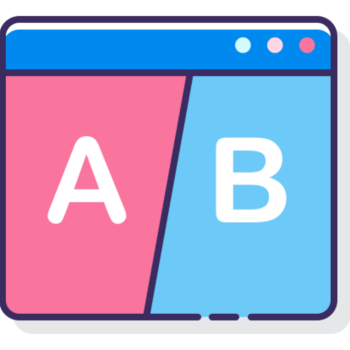
You create two alternative versions of your page, each with a different headline / color scheme / call to action etc.
You do a split test to see which one works better. When you find out what converts better, then you test something else.
The more elements you test, the higher you can boost your conversions.
Things to test: Headline, page layout and navigation, the offer itself, using different media (such as a video) and even a radical change if you think you might want to start over.
You can use Google Optimize if you’re looking for a free A/B tester, or Optimizely if you want more options.

Sometimes your conversions are taking a hit because you’re asking for the signup or the sale too soon in the process.
If people are still in ‘browsing’ mode, they might not be psychologically ready to subscribe or buy.
If you’re looking to improve conversions on a squeeze page that only asks for their email address, your focus should be on improving the reason why they would want to sign up. Making your offer more compelling – something that will immediately spark their desire – should do it.
But if you’re selling a product, it’s possible that you need to do more to build trust, develop a relationship and prove your expertise.
Remember, the longer and deeper the relationship with the prospect, the more likely they are to buy from you.

No matter what you’re selling or how much you’re selling it for, there will be objections.
If I tried to sell $100 bills for $1, there would be objections (and you know what they are.)
Make a list of all the possible concerns your prospects might have.
And then address each one of those in your presentation / webpage / sales funnel.

People won’t buy from you if they have no need for your product, if they have no money to buy your product, if they’re not in a hurry, and if they don’t trust you.
There’s not a lot you can do about the first 2 items on that list.
You can create urgency by limiting the number of products to be sold or the duration of your sale.
So what makes people trust your website?
Several things:

If I were to give you a value proposition that reads like this…
“Revenue-focused sales automation and marketing effectiveness solutions unleash collaboration throughout the revenue cycle,”
…would you have a clue what I was talking about?
Because I sure don’t. It’s not useful to the person reading it, unless your goal is chase them off of your page. Then I suspect it’s highly effective.
Just remember, clarity if key. If they don’t understand exactly what you’re saying, they’re not going to convert.

Your goal is to get people to focus solely on the action you want them to take and nothing else. Take a look at your page for anything that might divert the visitor away from what you want them to do. Minimize distraction, unnecessary product options, links and extraneous information.
And ask yourself if there is anything else you can remove that is not contributing to the conversion.
Increasing your conversion rate isn’t hard, but it does take effort…
Effort that will be well-rewarded in increased sales and revenues long after you’re done making the necessary changes.