
Get Your Free Blogging Fundamentals Report...
Just enter your details in the form below and we'll send you the free bonus resource that goes with this article.
Just enter your name and email below to get instant access!

 Content Marketing9th OctoberBy Jason Daly
If you’re looking for ways to make your blog more engaging and informative, content curation is a great option.
But what is content curation, and how can you use it on your blog?
Here’s a quick guide to help you get started.
Headline 1Headline 2Headline 3

Content curation is the process of sorting through and sharing online content that is relevant to your audience.
When done well, content curation can help you become a trusted source of information and make your blog more engaging.
Content curation can be used to build a resource of information on a particular topic, to create a news feed of relevant content, or simply to surface the best content on a given subject.

There are several reasons to curate content. One reason is to provide your audience with a one-stop shop for information on a particular topic. This saves your audience time by not having to search for information from multiple sources.
Another reason to curate content is to establish yourself as an expert on a particular topic. By curating the best content from around the web, you are showing your audience that you are knowledgeable about the subject matter.
You can also add your own commentary and analysis to the content you share; after all people are visiting your blog or website to hear from you and your views.
Content curation helps you to save time by sharing content that’s already been created, rather than creating everything yourself.
Lastly, curating content can help to build relationships with other bloggers and website owners. When you share their content, they are likely to return the favor.
This can help to grow your audience and expand your reach. Always give attribution to anything you share or comment on, and if you can, let the original source know that you have cited them.

TIP:
Try finding a product or service you like and see whether they offer an affiliate program. If not, why not reach out to them and ask whether they would be willing for you to promote their products and for you to get a commission?

If you are serious and want to take your blogging to the next level, check out the Rapid Blogging Blueprint. This is a premium level training that takes you through each and every step of setting up your own highly profitable blog and profiting from it.
Get Instant AccessLearn More Now
The Rapid Blogging Blueprint training combines manuals, checklists and over the shoulder video training to get your blog up and running, and into profit…quickly.

Once you’ve curated content, you can share it on social media, your blog, or in an email campaign.
When you share your curated content on social media, be sure to include a link back to the original source. This will give credit to the original author and help you build relationships with other thought leaders in your industry.
If you have a blog, you can share your curated content there. Be sure to include a link back to the original source and give credit to the original author.
If you have an email list, you can share your curated content in your newsletter or in a dedicated email campaign. Be sure to include a link back to the original source and give credit to the original author.
SEO is a great way to get your content in front of more people.
By optimizing your content for the search engines, you can increase your chances of people finding it when they search for relevant keywords.
“Achievers – whether in business, sports, or the arts — are committed to continual improvement.”
– Jack Canfield

Content curation is a great way to find and share high-quality content with your audience. If you curate content regularly, you can build a strong reputation as a source of great content.
And, if you promote your curated content properly, you can get more exposure for the content creators you’re featuring.
What are your thoughts on content curation? Do you curate content on your blog or website? If not, why not?
If you really want to know more about the power of content marketing and blogging, you can take a look at the Rapid Blogging Blueprint training course or if you just want a few pointers for now you can grab the featured resource below for a free blogging report; download, read it and take action


Content Marketing9th OctoberBy Jason Daly
If you’re looking for ways to make your blog more engaging and informative, content curation is a great option.
But what is content curation, and how can you use it on your blog?
Here’s a quick guide to help you get started.
Headline 1Headline 2Headline 3
Content curation is the process of sorting through and sharing online content that is relevant to your audience.
When done well, content curation can help you become a trusted source of information and make your blog more engaging.
Content curation can be used to build a resource of information on a particular topic, to create a news feed of relevant content, or simply to surface the best content on a given subject.
There are several reasons to curate content. One reason is to provide your audience with a one-stop shop for information on a particular topic. This saves your audience time by not having to search for information from multiple sources.
Another reason to curate content is to establish yourself as an expert on a particular topic. By curating the best content from around the web, you are showing your audience that you are knowledgeable about the subject matter.
You can also add your own commentary and analysis to the content you share; after all people are visiting your blog or website to hear from you and your views.
Content curation helps you to save time by sharing content that’s already been created, rather than creating everything yourself.
Lastly, curating content can help to build relationships with other bloggers and website owners. When you share their content, they are likely to return the favor.
This can help to grow your audience and expand your reach. Always give attribution to anything you share or comment on, and if you can, let the original source know that you have cited them.
TIP:
Try finding a product or service you like and see whether they offer an affiliate program. If not, why not reach out to them and ask whether they would be willing for you to promote their products and for you to get a commission?
If you are serious and want to take your blogging to the next level, check out the Rapid Blogging Blueprint. This is a premium level training that takes you through each and every step of setting up your own highly profitable blog and profiting from it.
Get Instant AccessLearn More Now
The Rapid Blogging Blueprint training combines manuals, checklists and over the shoulder video training to get your blog up and running, and into profit…quickly.
Once you’ve curated content, you can share it on social media, your blog, or in an email campaign.
When you share your curated content on social media, be sure to include a link back to the original source. This will give credit to the original author and help you build relationships with other thought leaders in your industry.
If you have a blog, you can share your curated content there. Be sure to include a link back to the original source and give credit to the original author.
If you have an email list, you can share your curated content in your newsletter or in a dedicated email campaign. Be sure to include a link back to the original source and give credit to the original author.
SEO is a great way to get your content in front of more people.
By optimizing your content for the search engines, you can increase your chances of people finding it when they search for relevant keywords.
“Achievers – whether in business, sports, or the arts — are committed to continual improvement.”
– Jack Canfield
Content curation is a great way to find and share high-quality content with your audience. If you curate content regularly, you can build a strong reputation as a source of great content.
And, if you promote your curated content properly, you can get more exposure for the content creators you’re featuring.
What are your thoughts on content curation? Do you curate content on your blog or website? If not, why not?
If you really want to know more about the power of content marketing and blogging, you can take a look at the Rapid Blogging Blueprint training course or if you just want a few pointers for now you can grab the featured resource below for a free blogging report; download, read it and take action
 Mindset24th NovemberBy Jason Daly
Are you afraid of public speaking? Do you get anxious when meeting new people? If you answered “yes” to either of these questions, you’re not alone. Fear is a natural emotion that we all experience at one point or another.
But just because fear is natural, doesn’t mean we have to let it control us. There are plenty of things we can do to overcome our fears and live a life full of confidence.
In this blog post, we’ll share 11 tips on how to overcome your fear. By the end, you’ll have a better understanding of how to manage your fears and, hopefully, be on your way to conquering them!

We all have fears. Some of us are afraid of the dark, some of us are afraid of heights, and some of us are afraid of public speaking. But what are we really afraid of?
The answer is simple: we’re afraid of the unknown. When we don’t know what’s going to happen, our brain automatically goes into survival mode and starts to worry.
So how can we overcome our fears?
The first step is to understand them. What is it that you’re really afraid of? Is it the dark itself, or is it the thought of what might be lurking in the dark? Once you’ve identified your fear, you can start to work on overcoming it.
Start by facing your fear head on. If you’re afraid of the dark, go into a dark room and sit for a while. Don’t turn on the lights, don’t look at your phone, just sit in the darkness and breathe. Notice how your body reacts. Do you start to feel anxious? Do your heart rate and breathing increase? Just sit with it and observe. The more you do this, the less afraid you’ll become of the dark.
If you’re afraid of heights, start by going to a high place and just looking out over the edge. Don’t go too close, just stand back and take in the view. Again, notice how your body reacts. Do you start to feel dizzy? Do your palms start to sweat? Just observe and breathe. The more you do this, the less afraid you’ll become of heights.
The key is to slowly desensitize yourself to your fear. Don’t try to force it, just take small steps and let your mind and body adjust at their own pace. You’ll be surprised at how quickly you can overcome your fears when you take the time to understand them.

Are you someone who is always looking for the negative in every situation? Do you find yourself dwelling on your mistakes and feeling like you’ll never be good enough? If so, it’s time for a change.
It’s time to change your mindset.
Your mindset is your attitude and outlook on life. It’s the way you think about yourself, your abilities, and your circumstances. And it can have a major impact on your success or failure in life. If you have a negative mindset, you’ll always see the glass as half empty. You’ll focus on your shortcomings and believe that you’re not good enough. You’ll be pessimistic and expect the worst.
But if you have a positive mindset, you’ll see the glass as half full. You’ll focus on your strengths and believe that you can achieve anything you set your mind to. You’ll be optimistic and expect the best.
Which mindset do you think will help you be more successful in life? It’s not always easy to change your mindset. But it’s definitely possible. And it’s worth it.
Here are some tips to help you change your mindset:
1. Be aware of your thoughts.
The first step is to become aware of your thoughts. Pay attention to the way you talk to yourself. Are you always putting yourself down? Are you always focusing on the negative?
2. Challenge your negative thoughts.
Once you’re aware of your negative thoughts, you can start to challenge them. Are they really true? Are they helpful? Are there any other ways to look at the situation?
3. Practice positive thinking.
Make a conscious effort to think more positive thoughts. Focus on what’s going right in your life, not what’s going wrong. Focus on your strengths and what you’re good at.
4. Be patient.
Changing your mindset takes time. Be patient with yourself and don’t expect overnight results. Keep at it and you’ll see gradual improvements.
5. Get support.
Talk to a friend or family member who is supportive and positive. They can help you stay motivated and focused on changing your mindset. Changing your mindset is a journey. It’s not always easy, but it’s definitely worth it, and it can lead to a happier, more successful life.

Whether it’s a fear of failure, a fear of rejection, or a fear of the unknown, we all have something that holds us back from truly living our best lives.
One of the best ways to deal with our fears is to simply write them down. By putting our fears into words, we can begin to understand them better and, hopefully, start to overcome them.
So, what are you afraid of? Take a piece of paper and a pen and start writing. Don’t worry about grammar or punctuation, just let the words flow. Once you’re finished, take a look at what you’ve written and see if you can identify any patterns or common themes.
Here are some of the things you might want to include:
What are you afraid of?What are the consequences of your fear?What are the odds of the thing you’re afraid of actually happening?What would you do if the thing you’re afraid of did happen?
Do you see any patterns? Are there any common themes? What do your fears say about you?
Once you’ve taken some time to reflect on your fears, it’s time to start working on overcoming them. Remember, you’re the only one who can change your life, so don’t be afraid to take risks and step outside of your comfort zone. You might just surprise yourself.
We all have our own set of fears. Some of us are afraid of public speaking, while others are afraid of job interviews or sky diving. No one said you have to do it all in one go. You can take small, bite-sized steps to overcome your fear.
Start by thinking about what it is that you’re afraid of. Is it the actual act of speaking in public, or is it the thought of being judged by others? Once you’ve identified your fear, you can start to work on overcoming it.
If you’re afraid of public speaking, start by practicing in front of a mirror. This will help you to get a feel for what you need to do in order to project confidence. Then, try speaking in front of a friend or family member. This will help you to get over your nerves and give you the practice you need.
If you’re afraid of job interviews, start by doing some research. Learn as much as you can about the company you’re interviewing with and the position you’re applying for. This will help you to feel more prepared and confident when you go into the interview. Then, practice your answers to common interview questions with a friend or family member. This will help you to get over your nerves and give you the practice you need.
No matter what your fear is, you can overcome it by taking small, bite-sized steps. Identify your fear, do some research, and then practice, practice, practice. With time and effort, you’ll be able to overcome anything that’s holding you back.

One of the most difficult things to do in life is to face your fears head-on. It’s easy to let fear control you, but it’s not always easy to stand up to it and conquer it.
TIP:
When you’re faced with something that scares you, it’s important to remember that you’re not alone. Everyone feels fear at some point in their lives. The key is to not let fear control you.
There are a few things you can do to outsmart your fear. First, it’s important to understand what’s triggering your fear. If you can identify the source of your fear, you can start to work on addressing it.
Second, try to re-frame your thinking about the situation that’s causing you fear. Instead of thinking about all the ways that things could go wrong, focus on the positive outcomes that are possible.
Third, take small steps to face your fear. If you’re afraid of public speaking, for example, start by speaking in front of a small group of people. Gradually increase the size of the group as you become more comfortable.
Finally, remember that you’re not alone. Talk to a friend or family member about what you’re going through. They can offer support and understanding.

No one said you had to overcome your fears all by yourself. It’s okay to ask for help. If you’re feeling overwhelmed or like you can’t do it all on your own, that’s perfectly normal. In fact, it’s a good idea to ask for help when you’re struggling. There’s no shame in admitting that you need a little assistance.
The people who care about you will be more than happy to support you as you work through your fears. Lean on your loved ones for strength and encouragement. Talk to them about what you’re going through and let them know how they can help.
There are also professional resources available if you need more comprehensive support. Therapists can help you understand and work through your fears. They can provide guidance and tools to help you make progress.
Don’t be afraid to reach out for help when you need it. It’s a sign of strength, not weakness.

When it comes to dealing with our fears, it’s important to have a plan. After all, taking action is the best way to overcome our fears. But what does a good plan look like? Well, it depends on the fear you’re trying to overcome. But there are some general principles that can help you create a plan that will work for you.
1. Start with the end in mind.
When you’re making a plan to overcome your fears, it’s important to start with the end goal in mind. What do you want to achieve? What does success look like? Keep this in mind as you create your plan.
2. Break it down into smaller steps.
Once you know what your goal is, break it down into smaller steps that you can take to get there. Having a series of smaller goals will help you stay focused and motivated as you work to overcome your fear.
3. Put it in writing.
Writing out your plan can help you clarify your thoughts and make it more concrete. Plus, it can be helpful to refer back to your plan when you’re feeling discouraged.
4. Share it with someone you trust.
Telling someone else about your plan can help you stay accountable and on track. Find a friend, family member, or therapist who can offer support and encouragement.
5. Take action.
Of course, the most important part of any plan is to take action. Once you’ve created your plan, it’s time to put it into motion. Don’t let your fear stop you from taking the first step.
Making a plan is a great first step in overcoming your fears. But it’s only part of the journey. Be patient with yourself and don’t give up. With time and effort, you can overcome anything.

When it comes to fear, we all have our own unique experiences and triggers. For some of us, the thought of public speaking or heights can send us into a panic. Others may have a more general sense of anxiety that can make everyday activities feel daunting.
No matter what your fear is, it’s important to remember that you’re not alone. Everyone has fears, and everyone (including all the successful people that you admire) has had to deal with them at some point in their life. The key to success is finding ways to overcome your fears and moving forward despite them.

TIP:
When you’re feeling afraid, take a moment to think about someone you admire who has achieved great things despite their fear. This can be anyone, from a historical figure to a businessman or entrepreneur, or even a friend or family member. Consider what they have accomplished and how they overcame their fear.
Remember that if they can do it, so can you. Use their story as inspiration to help you push through your own fears and achieve your goals.

When it comes to overcoming our fears, there is no one-size-fits-all solution. We all have different fears, and what works for one person might not work for another. However, there are some techniques that can be helpful for many of us.
One technique that can be helpful is keeping a journal. This can be a way to identify our fears and track our progress in overcoming them. It can also be a way to release our fears and let them go.
Another technique that can be helpful is meditation. This can help us to focus on the present moment and let go of our fears. It can also help us to connect with our inner wisdom and find the strength to face our fears.
Visualizations can also be helpful. This can involve picturing ourselves overcoming our fears or visualizing a peaceful and calm place. This can help to shift our focus and give us the courage to face our fears.
Find a technique that works for you and that you can commit to. Try out different techniques and see what works best for you. Remember, there is no one-size-fits-all solution. What works for one person might not work for another. But if we keep trying, we will find a way to overcome our fears.

When you’re under stress, your body goes into “fight or flight” mode, which means that your sympathetic nervous system is activated. This causes your heart rate to increase, your blood vessels to constrict, and your muscles to tense up.
If you’re constantly in this state, it can lead to physical problems like headaches, digestive issues, and even heart disease.
Do a quick body check to see if you’re holding any fear in your body. Is your jaw clenched, are your shoulders hunched, your fists clenched? Are you frowning?
That’s why it’s so important to find ways to release the physical tension that you may be holding in your body. Exercise is a great way to do this, as it helps to release endorphins, which are natural mood-boosters.
Yoga, Tai Chi, and meditation are also great for relaxation. If you can find a way to focus on your breath and clear your mind, it can help to ease the physical tension in your body.
Try to make time for some relaxation and self-care every day. It may be hard to find the time, but your body will thank you for it in the long run.

Worry has a way of distorting reality. It can make small problems seem huge and insurmountable. This is especially true at 4 a.m. when you’ve been lying awake for hours, worrying about everything that could go wrong.
The first step to putting your worries into perspective is to take a deep breath and remind yourself that most things are not as bad as they seem. Most problems have a way of working themselves out, one way or another.
Try to focus on the things that you can control and let go of the things that you can’t. Worrying about things that you can’t control is a waste of energy and only serves to make you feel more stressed.
Take things one step at a time. Break down your worries into manageable pieces and tackle them one at a time. You’ll be surprised at how much better you’ll feel once you start taking action.
Finally, don’t forget to take care of yourself. Worry can take a toll on your physical and mental health. Make sure to eat healthy, exercise, and get plenty of rest. When you take care of yourself, you’ll be better equipped to handle whatever life throws your way.

If you’re someone who struggles with anxiety or fear, know that you’re not alone. Millions of people deal with these issues on a daily basis. While it can be difficult to manage, there are ways to overcome your fear. Remember that fear is a natural emotion and it’s okay to feel it.
But don’t let it control you. With a little bit of effort, you can manage your fear and live a life full of confidence! In this article, we’ve shared 11 tips on how to do just that. We hope that by the end, you have a better understanding of how to manage your fears and are one step closer to conquering them!
As you can appreciate, changing the way you think can have a huge impact on your life, and if you want to know more about developing an inspirational mindset for success, please click on the featured resource below for a free Strong Mindset report; download, read it and take action 

 Niche Research20th NovemberBy Jason Daly
Are you considering starting an online business, but not sure which niche to choose? There are many factors to consider when choosing your niche, and it can be a tough decision. But don’t worry, we’re here to help!
Picking the right niche is essential to the success of any business. By choosing a niche that is too broad, you risk overwhelming your readers with too much information. On the other hand, picking a niche that is too narrow can make it difficult to find enough content to keep your content fresh.
In this latest article, we’ll give you some tips on how to choose the right niche for your business. We’ll also share some examples of popular niches to give you some inspiration.
So if you’re ready to start an online business, but not sure which niche to choose, read on!

Before you can pick a niche, you need to define your audience. Whom are you writing for? What are their needs and interests? By understanding your audience, you’ll be able to narrow down your niche options.
So, who is your audience? This is an important question to answer because it will help determine the overall tone, approach, and topics you write about. Your audience will also help to shape the design and functionality of your blog and business.
If you’re not sure who your target audience is, think about what you hope to achieve with your blog. Do you want to build a following of like-minded individuals? Are you looking to generate leads or sales? Do you simply want to share your thoughts and ideas with the world?
Some things to think about:
Are they male or female?How old are they?Are they single or married?Do they have children?Do they have pets?What sort of education level do they have?What kind of job do they have?What is their average salary?What level of disposable income do they have?What are their hobbies?
Once you have a better understanding of your audience, you can start to think about what type of niche you’d like to focus on. However, it’s important to keep in mind that your niche should be something you’re passionate about. If you’re not interested in the topic, it will be difficult to maintain a successful business.
A niche is simply a group of people with common interests. When it comes to blogging, there are a wide variety of niches to choose from.
To help you narrow down your options, here are some popular niches:
Making money/businessHealth and fitnessFood and drinkParentingRelationshipsPersonal financeCareer adviceTechnologyTravelLifestyle
These are just a small fraction of the niches you can find, but it gives you a starting point to begin with.

Now that you have a better understanding of your audience and what you hope to achieve with your blog, it’s time to start thinking about the content you’ll publish on your blog to service that audience. What topics will you write about? What type of content will you create? Will you share original recipes, tips for saving money, or personal stories?
By focusing on a specific group of people with common interests, you’ll be able to create content that appeals to them. This will help you build a loyal following and achieve your blogging goals.
It’s important to remember that your content should be helpful, interesting, and engaging. If you’re not sure where to start, take a look at some of your favourite blogs and see what makes them successful.
One of the quickest and best ways create relevant content is to research what they are looking for online. What kinds of pains and problems do they have? What do they want (not necessarily need)? There are a few different ways to do this. You can use keyword research tools to find popular keywords related to your niche. You can also use Google’s AdWords Keyword Planner to find keywords related to your niche.
For example, health and fitness is a huge niche, so try drilling down. What about weight loss? Still huge.
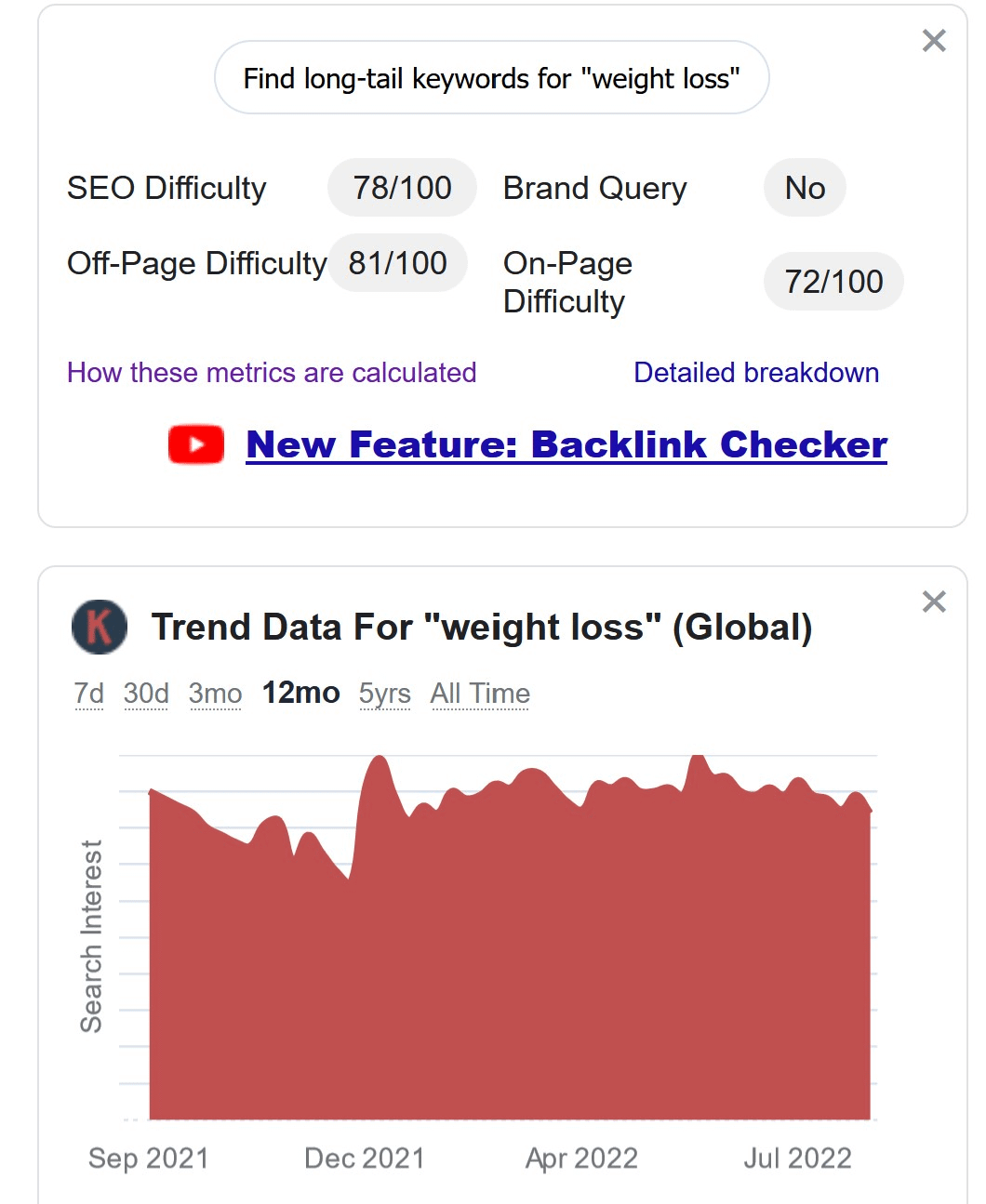
What about weight loss for women? Getting better.

What about weight loss for women over 40? Even better. I hope you get the idea.

As you can see from the screenshots above, the scores for SEO, On Page and Off Page difficulty go down as you drill into a sub niche, meaning that it will become increasingly easier to rank for those keywords.

When it comes to making money online, choosing a niche is one of the most important decisions you’ll make. There are a lot of factors to consider when choosing a niche, but one of the most important is whether or not the niche is profitable. If you choose a niche that isn’t profitable, you’ll likely find it very difficult to make any money. On the other hand, if you choose a niche that is profitable, you’ll have a much better chance at making money.
So, how do you know if a niche is profitable?
There are a few things you can look at to help you determine if a niche is profitable or not.
One of the most important is the competition. If there are a lot of people in your niche, it’s likely that there’s a lot of competition. This isn’t necessarily a bad thing, but it does mean that you’ll need to work harder to stand out from the crowd. However, competition does mean demand, and that is good. Bear in mind that you will need to find a way to stand out from the crowd.
Another thing to consider is the search volume. This is the number of people who are searching for your particular niche. If the search volume is low, it’s likely that the niche isn’t very profitable.
Lastly, you’ll want to look at the cost per click. This is how much you’ll pay each time someone clicks on an ad for your niche. If the cost per click is high, it’s likely that the niche is more expensive and therefore less profitable.
Also, consider narrowing your niche. The list of niches above is pretty broad, so there will likely be lots of competition if you are trying to target very broad keyword searches. By drilling down into a sub niche, you will have less volume, but less competition, and your audience will be that much more targeted. You need to find the sweet spot in a niche or sub niche, and it isn’t always easy.
Doing this will help you to create highly targeted content and also make writing sales copy easier as you are targeting a really specific audience.
So, if you find that a sub niche is generating a lot of traffic or revenue, then it’s a good sign that it’s profitable. However, if you don’t find either of these things, then it’s a good idea to move on to another niche. And that leads on to the final stage…
If you are serious and want to take your blogging to the next level, check out the Rapid Blogging Blueprint. This is a premium level training that takes you through each and every step of setting up your own highly profitable blog and profiting from it.
Get Instant AccessLearn More Now
The Rapid Blogging Blueprint training combines manuals, checklists and over the shoulder video training to get your blog up and running, and into profit…quickly.

Once you’ve found a profitable niche, you need to test it. The best way to do this is to start a blog in your niche and see how it goes. If it’s successful, you can then start monetizing your blog. If it’s not successful, you can try another niche.
There are a few things you should keep in mind when testing your niche:
Make sure you have something to say. Before you start your blog, you need to make sure you have something valuable to say. If you don’t, your blog will definitely be a flop.Don’t be afraid to experiment. When you’re first starting out, it’s important to experiment with different content and strategies to see what works best for your niche.Be patient. It takes time to build an audience and start seeing results. Don’t give up if you don’t see results immediately.
If you keep these things in mind, you’ll be well on your way to finding a profitable niche for your business and making money for you.
If you want to know more about leveraging the power of niche and authority marketing, then check out the featured resource below for a free report that compliments this post; download, read and take action

 Motivational17th NovemberBy Jason Daly
What would it be like to begin your day organized and inspired? It would be fantastic, wouldn’t it? You would be confident that all was in order, know exactly what to do, and feel great.
Surprisingly, it doesn’t take a lot to get off to a good start every day. All you have to do is develop a morning routine which encourages and equips you for success every day.
A morning habit, or routine, is one of the keys of success for individuals who are really successful in their lives and businesses/careers. It doesn’t have to be complicated, and it really doesn’t have to take a long time to create or to follow.
It will need a commitment from you at first to plan it and then you will need to practice it daily, so it becomes a discipline that occurs without you needing to intentionally work at it.
The most focused and organized people’s morning routines typically contain the following things:
Get Up Early
Forget about extended lie-ins and hitting the snooze button every 5 minutes. Try setting your alarm an hour (or maybe two) earlier than usual and watch your productivity skyrocket.
An early morning start might not come easy at first, but as long as you get enough sleep and go to bed earlier, you’ll soon see the benefits.
Use Positive Visualization
Try setting the tone for your day by giving it a big push. Visualize your accomplishment right away. Use positive statements and keep them visible so you can view them regularly to increase their effectiveness.
If you do this stage within the first 15-20 minutes of waking, you will have a better chance of succeeding because you will be able to access your subconscious mind before your conscious mind awakens and ‘ruins things’ by taking over!
Get Some Exercise
Exercise will help to wake up your entire body by getting your heart pumping oxygen-rich blood throughout it, and your body in general. You don’t have to run 5 miles every day.
Gentle exercise, such as Tai Chi, morning stretching or yoga could be part of your workout routine to help calm and centre you while also providing time for quiet contemplation.
Drink Enough
Maintain your body’s hydration. Many people begin their morning with a glass of lemon water. Green juices or herbal teas are other fantastic options for an early morning drink to kickstart your day.
Planning
Make sure you know precisely what has to be done if you hope to have a good day. Prepare a to-do list and determine the priority order. Ensure that the list isn’t too long; 10 items or less is ideal.
Nutrition
A balanced breakfast is an excellent method to energize your body for the rest of the day. You’ll feel more awake and capable of concentrating on the activities at hand.
Reading
Spending a few minutes reading something uplifting or educational can make you feel more positive and driven. You don’t have to read for a long period; merely 10 minutes can really get your mind functioning and your motivation going.
Morning reading ideas include self-help/personal development books or autobiographies and biographies of successful folks who might inspire you and serve as role models.
Money Tasks
Before you leave for your commute or start your day at home, it’s crucial to do something that may either generate you money or keep you from wasting money.
Prep your meals for the day so you aren’t tempted to order takeout at the end of the day. Make sure the dishwasher is filled and the kitchen countertops are clean and clear so you don’t have to think about it. Pay your invoices on time to avoid overdue notices and costs.
If you want to have a great day, you must begin with a positive attitude. Having a morning routine can guarantee that your days are well-organized and that you are motivated from the very beginning.
Now that you have a fantastic morning routine and a task that has to be completed, you are inspired to execute it. However, that is only the beginning…

You have a mission that you must perform. It’s something you want to do, and it’s challenging enough to keep you focused and on target without making you worried or doubting your skills.
What’s the best approach to go about it? Get into the zone, and you’ll discover that you’ll finish it faster than you imagined possible. So, how do you enter the zone?
Here are 6 basic steps that will help you get into the flow.
Step 1: Give Yourself Time – Make sure you allow yourself adequate time to finish the task. You’ll need a suitable environment for that.
Step 2: Adjust Your Environment – You will require a quiet, comfortable, and distraction-free working environment. Check that you are dressed comfortably and appropriately, that you have used the restroom, that you have eaten and drank something, and that the room temperature is comfortable for you.
Step 3: Focus On The Process – While working toward an end result (target), it is critical to focus on the activity itself. You can then free your ideas and problem-solving talents by removing any expectations and limiting thoughts.
Step 4: Engage Your Emotions – Because being in the zone is a good state of being, you must be alert and totally involved. Negative emotions will simply reduce your capacity to enter and stay in the flow state.
Step 5: Take Action – Keep the momentum rolling by remaining in a state of action. It is critical not to pause and contemplate since this will stop negative feelings such as self-doubt from coming in. You must remain completely immersed in the action, with no sense of yourself or your own ego.
Step 6: Practice – As they say, “practice makes perfect.” Therefore, by repeatedly putting yourself in the zone, you’ll develop your unique series of rituals and triggers that will help in entering the flow state. Your body will adjust as they eventually become second nature by accessing the zone quicker and easier.
If you want to enter the zone and make wonderful things happen, follow the six simple actions outlined above. Regular practice will assist you in developing your own set of triggers and rituals to help make the process easier. By doing this, you have the opportunity to live a more full and enriching life.
If you want to know more about being productive, then check out the Featured Resource below for a free report; download, read it and take action


